
Cryptocoryne Flamingo Pink Loss in Summer Heat: A Practical Guide
Cryptocoryne Flamingo often loses pink when a tank warms in summer. What the care range says, what the science does and does not show, and how to cool, light, and feed it.
Marcus Hale · Published 2026-06-11 · 31 min read
Key Takeaways
- Flamingo’s official care range is 22 to 28 °C. Pink often fades as a tank warms in summer, but no published study has measured a specific temperature threshold in this aquatic plant, so treat 28 °C as a care ceiling, not a proven collapse point.
- The heat-and-pigment mechanisms below are working hypotheses, not Flamingo measurements. They come from other species and food-extract chemistry.
- Faded mature leaves generally do not re-color. Watch new growth from the rhizome for recovery, on a timeline that varies with plant health rather than a fixed number of weeks.
- A clip-on fan with the lid off can cool a tank by evaporation. The exact drop depends on humidity, surface area, and airflow, and lid-off operation needs its own safety checklist.
- If iron deficiency is confirmed, chelated iron and a complete trace mix can help. Rule out other causes first rather than dosing on the assumption of a single bottleneck.
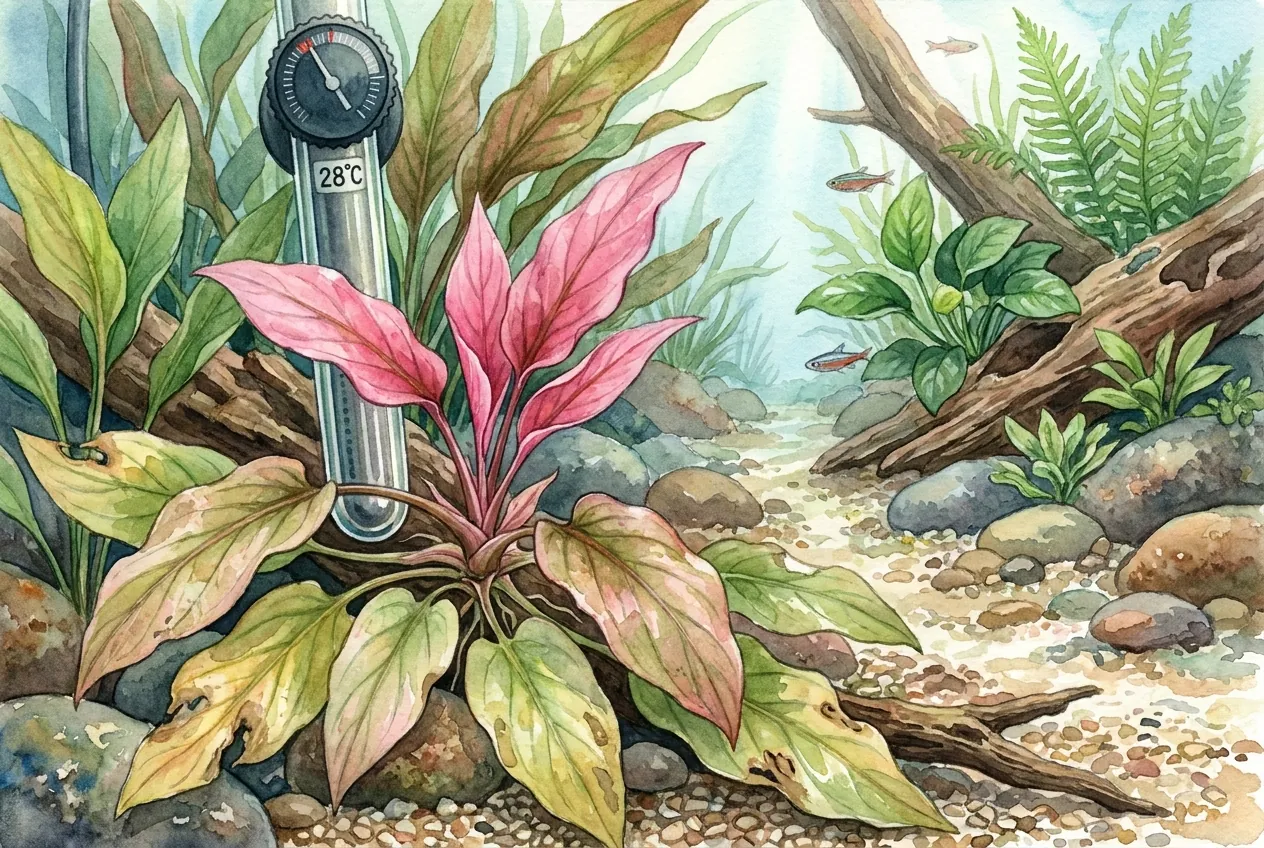
Your Cryptocoryne Flamingo went bubblegum pink in spring. Now it is May, the room hit 84 °F, and the leaves have drifted toward muddy green.
A warm tank losing color is often a sign the plant has slowed pigment production rather than a sign it is dying, but that is not something you can confirm from color alone.
Start With the Cultivar’s Actual Limit
No peer-reviewed study defines Flamingo’s pink-loss temperature threshold. Related-plant pigment research can explain possible patterns, but use the plant’s care range, tank temperature, and new growth to guide decisions.
Its official care range is 22 to 28 °C (Dennerle), and some retailers list a wider range. That makes 28 °C a management ceiling, not a proven point where color collapses.
What Actually Makes Flamingo Pink?
Start with the pigment evidence
Flamingo’s pink comes from anthocyanins. Water-soluble flavonoid pigments the plant stores in the vacuole of each leaf cell.
Anthocyanins are the pigment family behind red cabbage, sweet cherries, and blueberry skins.
Cyanidin- and pelargonidin-type glycosides are common across pigmented plants, but the exact pigments in Flamingo have not been analyzed and published, so the specific molecules in this cultivar are not confirmed.
Across many plants, anthocyanins can act as photoprotective and antioxidant compounds rather than as decoration, though the balance of those roles varies by species, tissue, and wavelength.
In several species, strong light and mild stress raise anthocyanin production while heat can lower it.
Whether heat both blocks production and degrades existing pigment in Flamingo specifically has not been measured. The sections below explain why that is a reasonable expectation from related plants.
I photograph new leaves with a neutral gray card and the same aquarium lighting settings. Camera automation and tannin color can shift pale green toward pink, making casual photos unreliable.
Only leaves that developed after the latest temperature or light change enter my score. Older submerged leaves preserve conditions from an earlier growth window.
I record water temperature near the crown and substrate surface, then compare it with open water. A light-heated shallow zone can stay warmer than the tank average where the newest leaf is forming.
Which specific anthocyanins are in Cryptocoryne Flamingo?
The exact pigment profile of Flamingo has not been published in peer-reviewed work. Cyanidin- and pelargonidin-type anthocyanins are widespread across pigmented plants, and cyanidin-3-glucoside is one of the most common.
That does not identify the pigments that dominate in this cultivar. It only shows what is chemically plausible.
The glycoside tail matters in principle. In food and extract chemistry, acylated and glycosylated anthocyanins tend to resist heat better than free anthocyanidins.
This may be part of why some red plants hold color at higher temperatures than others, but in living leaves gene regulation, vacuolar pH, and pigment turnover also play a role, and the substitution pattern in Flamingo has not been characterized.
Anthocyanidins and anthocyanins, colored pigments as food, pharmaceutical ingredients, and the potential health benefits (PMC review)
Anthocyanins, A Comprehensive Review of Their Chemical Properties and Health Effects
Why does pink coloration matter to the plant?
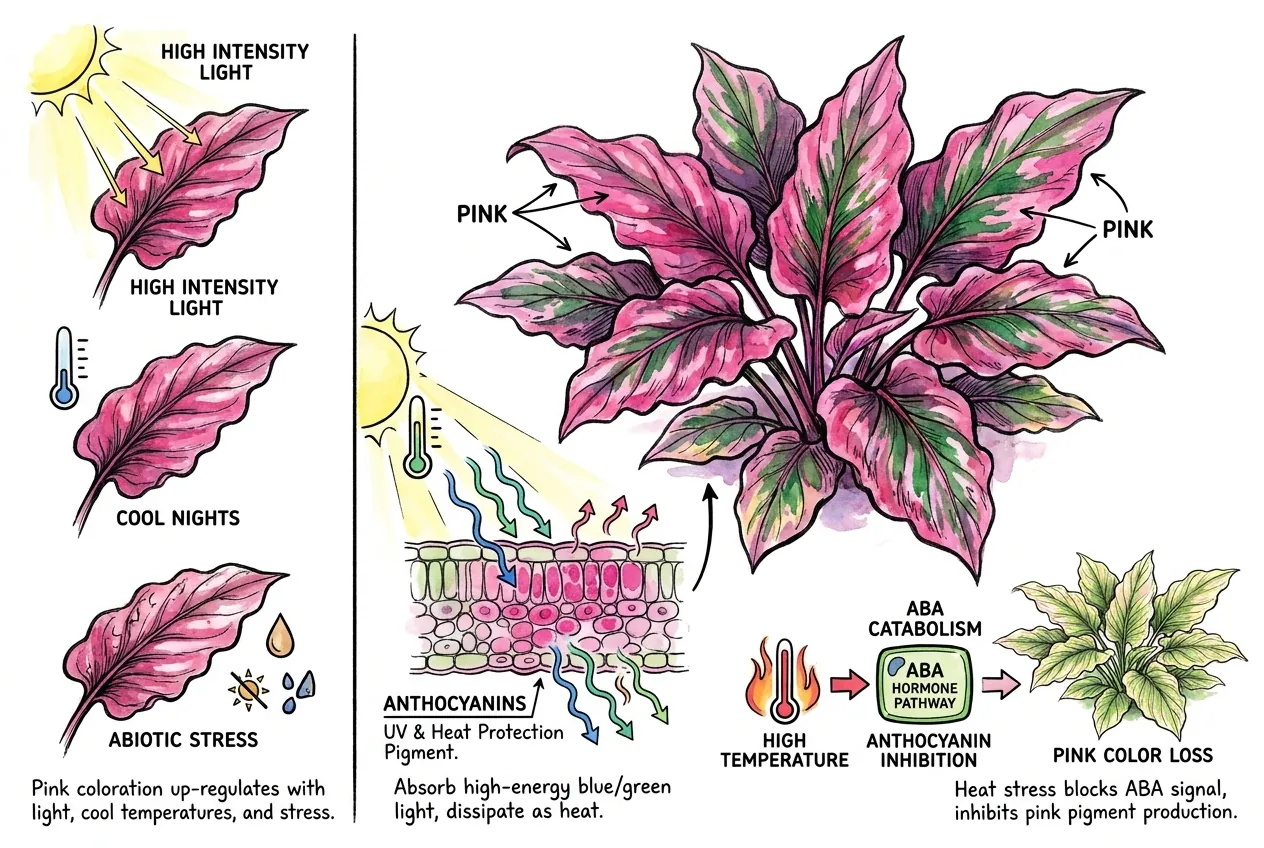
In many plants, anthocyanins contribute to photoprotection and antioxidant defense. They can absorb some high-energy wavelengths and help limit stress on the photosystems.
This is a real function, but it varies by wavelength, tissue, and species, so it is more accurate than calling anthocyanins a simple UV-and-heat sunscreen.
(Note that chlorophyll itself absorbs blue light strongly.)
Across a range of species, plants often raise anthocyanin biosynthesis when light intensity climbs, when nights cool, or under other abiotic stress.
The direction is common, but the strength and even the sign of the response differ between species and tissues.
A 2023 Frontiers paper on sweet cherry found that high temperature reduced anthocyanin accumulation in the fruit peel and suggested ABA catabolism as a likely mechanism.
That points to a plausible role for ABA in heat-related pigment loss, but it was measured in cherry fruit at 34/24 °C, not in Cryptocoryne, so it is not established that the same switch operates in Flamingo.
High temperature inhibited the accumulation of anthocyanin by promoting ABA catabolism in sweet cherry fruits
Plant stress response and adaptation via anthocyanins, A review
What Might Heat Do to the Pigment, and Why 28 °C?
Treat related-plant mechanisms as hypotheses
In other plants, heat can affect anthocyanins two ways. Biosynthesis enzymes slow down, and existing pigment can degrade faster.
It is reasonable to expect both to matter in a warm tank, but neither the crossover point nor a specific 28 °C threshold has been measured in Cryptocoryne.
Treat the figures below as mechanisms borrowed from related systems, and 28 °C as the top of Flamingo’s stated care range rather than a proven failure line.
What temperature shuts down anthocyanin biosynthesis?
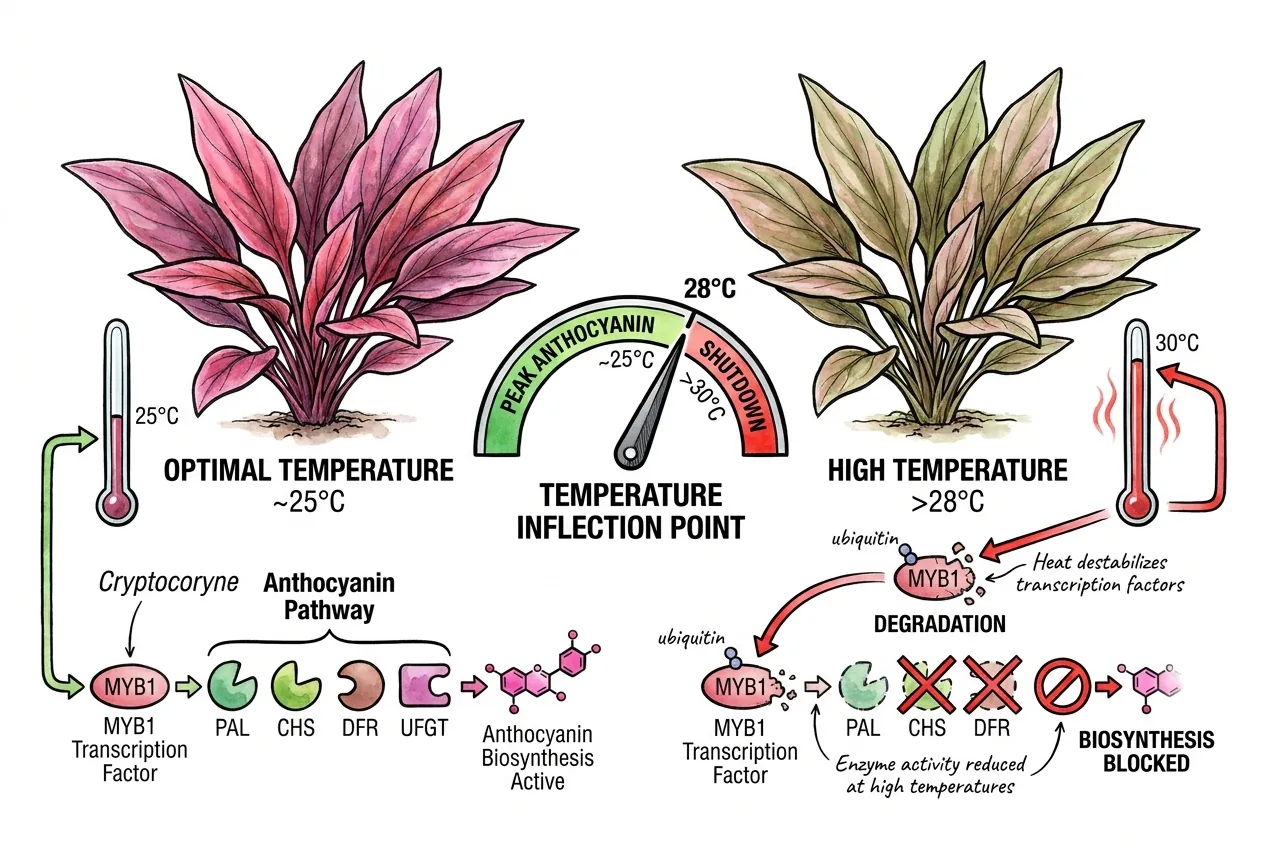
The pathway’s key enzymes include phenylalanine ammonia-lyase (PAL), chalcone synthase (CHS), dihydroflavonol 4-reductase (DFR), and the UFGT glycosyltransferases.
A 2017 Arabidopsis study showed that high ambient temperature can repress anthocyanin biosynthesis through COP1-mediated degradation of the HY5 transcription factor.
That work used seedlings grown on nutrient agar under continuous light and compared 17, 20, and 28 °C, so it describes a mechanism in one model plant rather than a temperature rule for aquarium species.
HY5 helps integrate light and temperature signals, and in that study it was destabilized as temperature rose, reducing pathway activity downstream.
It is plausible that a similar mechanism contributes to fading in Flamingo, but that has not been tested, and it would be an overstatement to say heat simply removes the pigment switch in this plant.
Grape data (UC Davis viticulture) shows berry anthocyanin content peaking around 25 °C and declining above 30 °C. Grape berries are a different organ in a different species under field cultivation, so this is a comparative reference, not a calibration of an aquarium threshold.
Taken together, these studies make a warm-tank fade plausible. They do not pin it to 28 °C in Cryptocoryne.
High Ambient Temperature Represses Anthocyanin Biosynthesis through Degradation of HY5
HY5, an integrator of light and temperature signals in the regulation of anthocyanins biosynthesis in Arabidopsis
Effects of temperature on anthocyanin biosynthesis in grape (UC Davis Viticulture and Enology)
How fast does existing pigment fall apart?
In food and extract systems, thermal degradation of anthocyanins generally follows first-order kinetics and speeds up with temperature.
A 2021 MDPI review summarizes these data. Representative half-lives in fruit and vegetable matrices are on the order of tens of hours near 60 °C. Those numbers describe extracted or processed material, not pigment inside living leaf cells, so they should not be read as a precise timeline for a planted tank.
A planted tank never reaches those temperatures. The relevant idea is only qualitative. If biosynthesis is throttled by heat while some background degradation continues, a leaf can shift from net gain to net loss.
Whether and when that happens in Flamingo at 28 to 30 °C has not been measured.
One proposed mechanism for fading is hydrolysis of the glycoside bond followed by ring-opening to a colorless form, which is favored by heat and higher pH.
A 2014 RSC Advances paper traced this pathway for the anthocyanidin cyanidin and showed pH and temperature interact.
That study worked with the aglycone in solution, though, so it is not direct evidence that aquarium pH hydrolyzes glycosides sealed inside a leaf’s vacuoles.
A Review of the Current Knowledge of Thermal Stability of Anthocyanins and Approaches to Their Stabilization to Heat
On the thermal degradation of anthocyanidins, cyanidin (RSC Advances)
Why is 28 °C the practical hobbyist threshold?
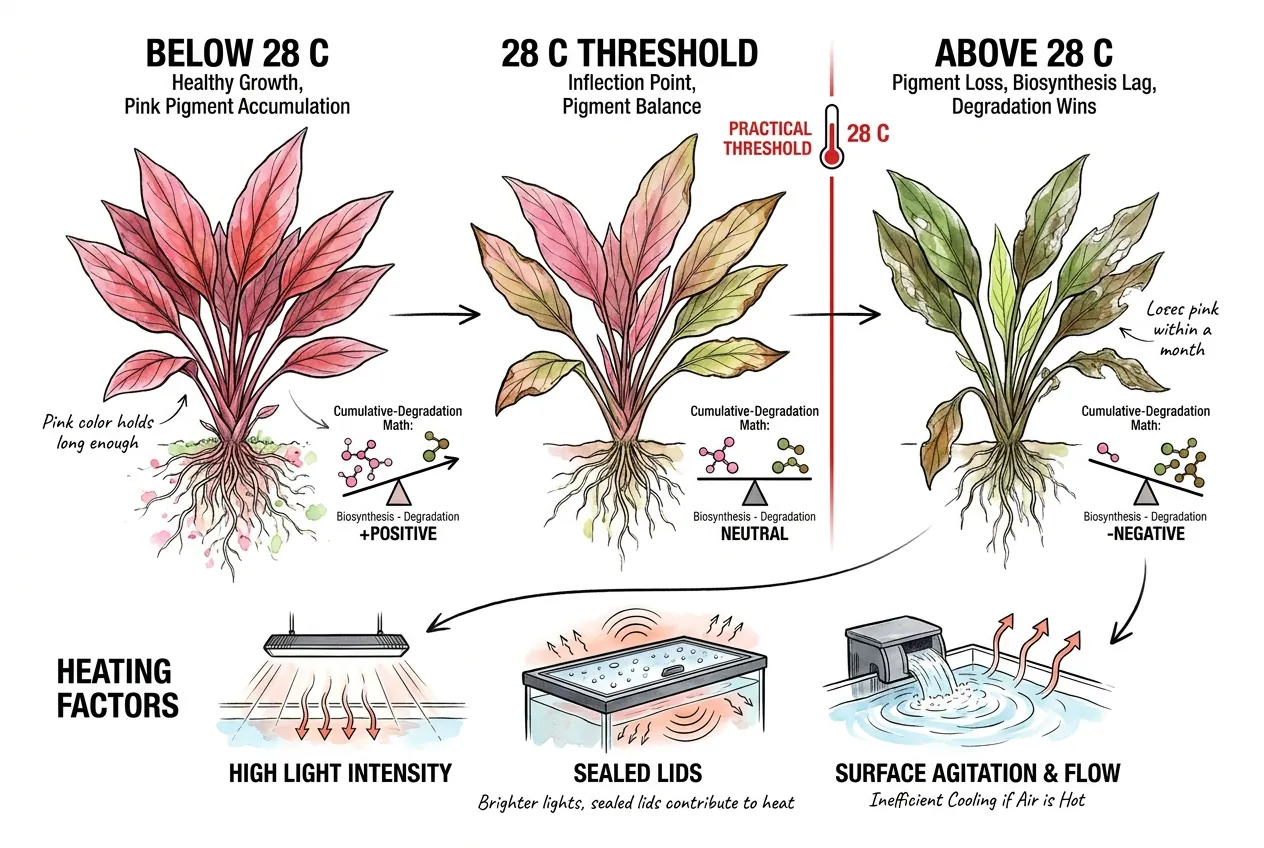
The main reason to treat 28 °C as a working ceiling is simply that it is the top of Flamingo’s official care range (Dennerle), and warmer water is where many keepers report color slipping.
There is no published measurement of a specific crossover temperature for this plant, so any exact inflection point would be guesswork dressed up as data.
Claims that you can take fruit or grape data and precisely adjust them for aquarium light and thermal cycling do not hold up. There is no published method to do that conversion, and the pigment chemistry of Flamingo, Pink Panther, and Rosanervig has not been analyzed, so differences in acylation between them are unknown rather than established.
What keepers can rely on is their own record. If your tank holds around 27 °C through summer and pink growth continues, that is useful evidence, if color fades as the tank warms toward and past 28 °C, cooling is a reasonable first lever to try.
Log the temperature and watch the trend in new leaves rather than assuming a fixed number of hours or weeks.
What Heats a Planted Tank Above 28 °C?
Separate heat sources before cooling
Planted tanks heat faster than fish-only tanks because the lighting is brighter, the lids are usually sealed, and the surface agitation is often deliberately throttled to preserve CO2.
All three traits trap heat that a basic goldfish tank would shed.
How much does the LED fixture contribute?
An LED converts only part of its input electricity to light. The rest becomes heat. For a 30 W fixture that is on the order of 20 W of waste heat, but it is wrong to assume all of it goes straight into the top of the water.
A fixture also sheds heat through its own heatsink, into the surrounding air, and by radiation, and the tank loses heat continuously by evaporation, convection, and conduction through the glass.
How much reaches the water depends on the fixture and the setup and is best measured, not assumed.
As an upper-bound sanity check. 25 W over 8 hours is about 720 kJ. If every joule went into 60 L of water with no losses, that would raise it by roughly 3 °C.
That 3 °C is an adiabatic upper bound, not a steady-state result. A real tank is losing heat the whole time, so the actual rise above room temperature is smaller and depends on ambient, surface area, lid, and airflow.
The reliable way to know your own tank is to compare water temperature to room temperature with the lights on and off.
Higher-wattage fixtures (for example a 60 W or 75 W unit) add more heat. More input watts generally means more waste heat, and a sealed canopy sheds it more slowly than an open top, but the relationship to actual water temperature is not a simple linear rule and should be checked against a thermometer.
Why do sealed glass lids make it worse?
Glass lids cut evaporation to near zero, and evaporation is a major heat-removal mechanism in an open-top tank.
Water evaporating near 25 °C carries away roughly 2,450 kJ per kilogram converted to vapor, so even a modest evaporation rate removes meaningful heat.
The actual cooling depends on how fast water evaporates, which is not fixed.
A sealed lid limits that cooling, so opening it can help. How much cooler an open tank runs varies with humidity, airflow, and surface area, and there is no single reliable figure for it. Measure your own tank rather than expecting a set number of degrees.
(Note. General evaporative-cooling references such as the Mississippi State Extension bulletin below describe wet-pad systems for poultry housing, not aquariums, and do not give an open-tank delta.)
Running lid-off has real tradeoffs to manage before you commit to it.
- Jumping fish or shrimp escaping. Check your stock and consider a mesh guard.
- Faster evaporation, which concentrates minerals. Top off with RO or dechlorinated water and watch the water line.
- Higher room humidity and potential condensation or mold in the space.
- Splash and electrical safety around lights and cords. Keep a drip loop and GFCI protection.
Many planted tanks can run lid-off in summer if these are handled, but it is not automatically safe for every setup or livestock list.
Evaporative Cooling Systems, How and Why They Work (Mississippi State Extension)
How much does surface agitation matter?
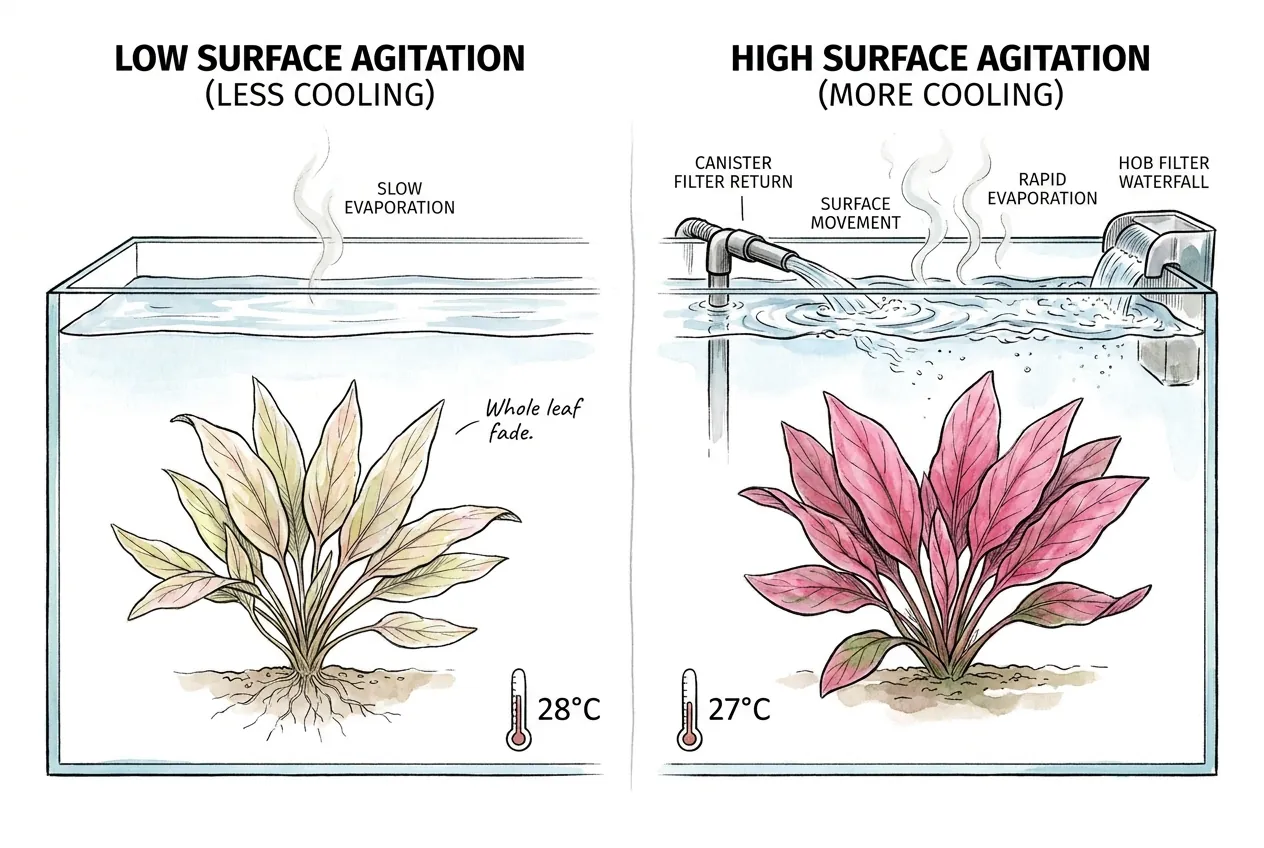
Stronger surface agitation increases evaporation and gas exchange, so it can add to evaporative cooling in an open-top tank.
A canister return aimed across the surface, or a HOB filter running high, will help, but by how much depends on surface area, humidity, and flow rather than a set wattage.
Even a small difference of a degree or so can matter on a hot day, which is why agitation is worth using as one lever among several.
Keepers who dial back agitation to preserve injected CO2 are also reducing this passive cooling.
In summer you can accept some CO2 loss and open the surface back up. If you instead raise CO2 injection to compensate, do it gradually and watch fish behavior, dissolved oxygen, and pH, since more agitation plus more CO2 can swing water chemistry. Keep aeration available in case livestock show stress.
Is It Really Heat, or Is It Iron, CO2, or Light?
Compare patterns before dosing
Color loss is not always one problem. Heat, iron and other nutrients, CO2, light, acclimation from emersed to submersed growth, and rhizome rot can all reduce or mask pink, and more than one can act at once.
The patterns below are clues that help narrow things down, not a way to prove a single cause.
Treat this as a differential diagnosis. Change one variable at a time and watch new growth.
How does heat-fade look different from iron deficiency?
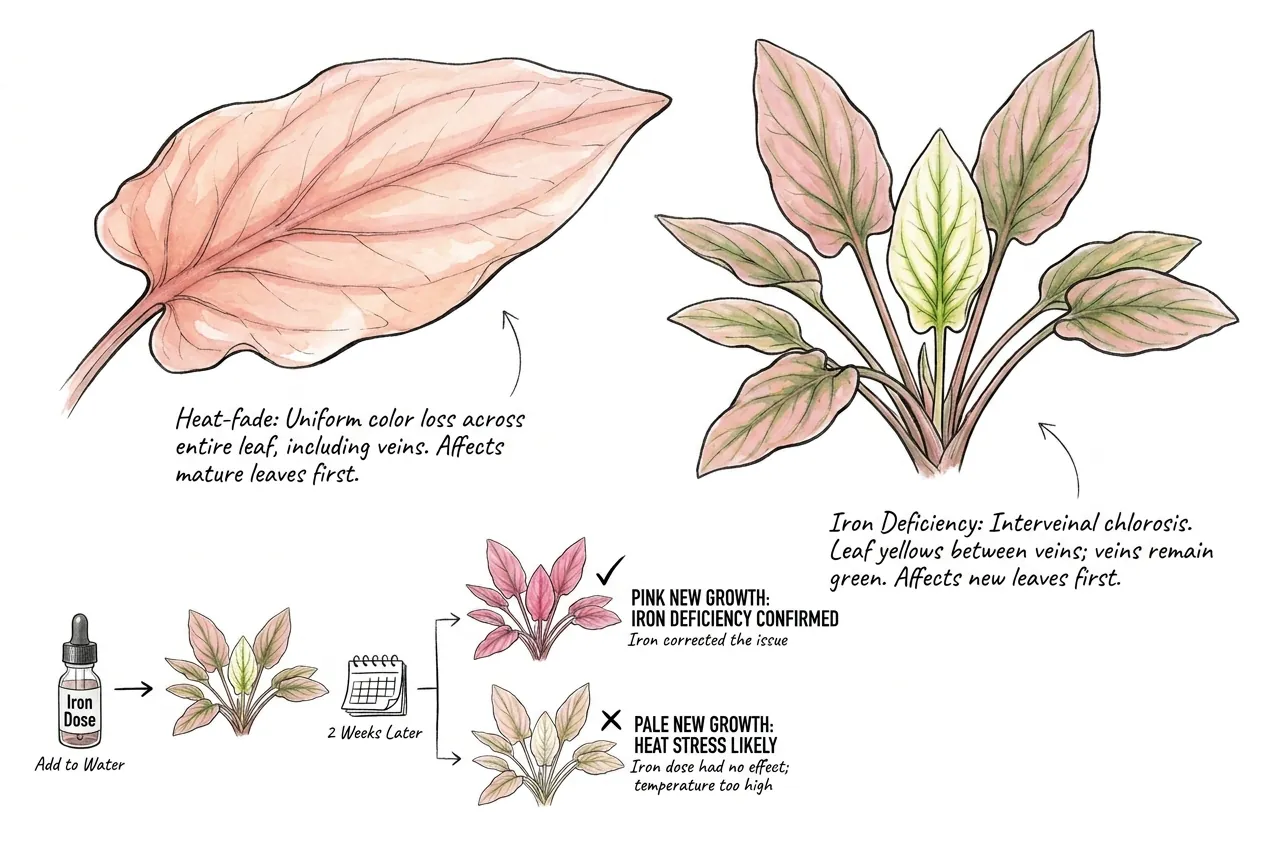
Interveinal chlorosis, yellowing between the veins while the veins stay green, is a classic clue for iron deficiency, though other deficiencies and damage can look similar in aquatic plants.
An even fade across the whole leaf, veins included, points less toward iron.
Because iron is not very mobile, deficiency often shows first on new growth. That is a general principle rather than a documented Flamingo observation, so use it as a hint alongside the rest of the picture.
Dosing iron and watching new growth can be informative, but a single dose is not a clean test. It does not control light, CO2, root uptake, other nutrients, or the dose itself.
If new growth improves it is suggestive, not proof, and if it does not, that alone does not confirm heat is to blame. Change one factor at a time.
HS1208/HS1208, Understanding and Applying Chelated Fertilizers Effectively Based on Soil pH (UF/IFAS)
What does CO2 starvation look like instead?
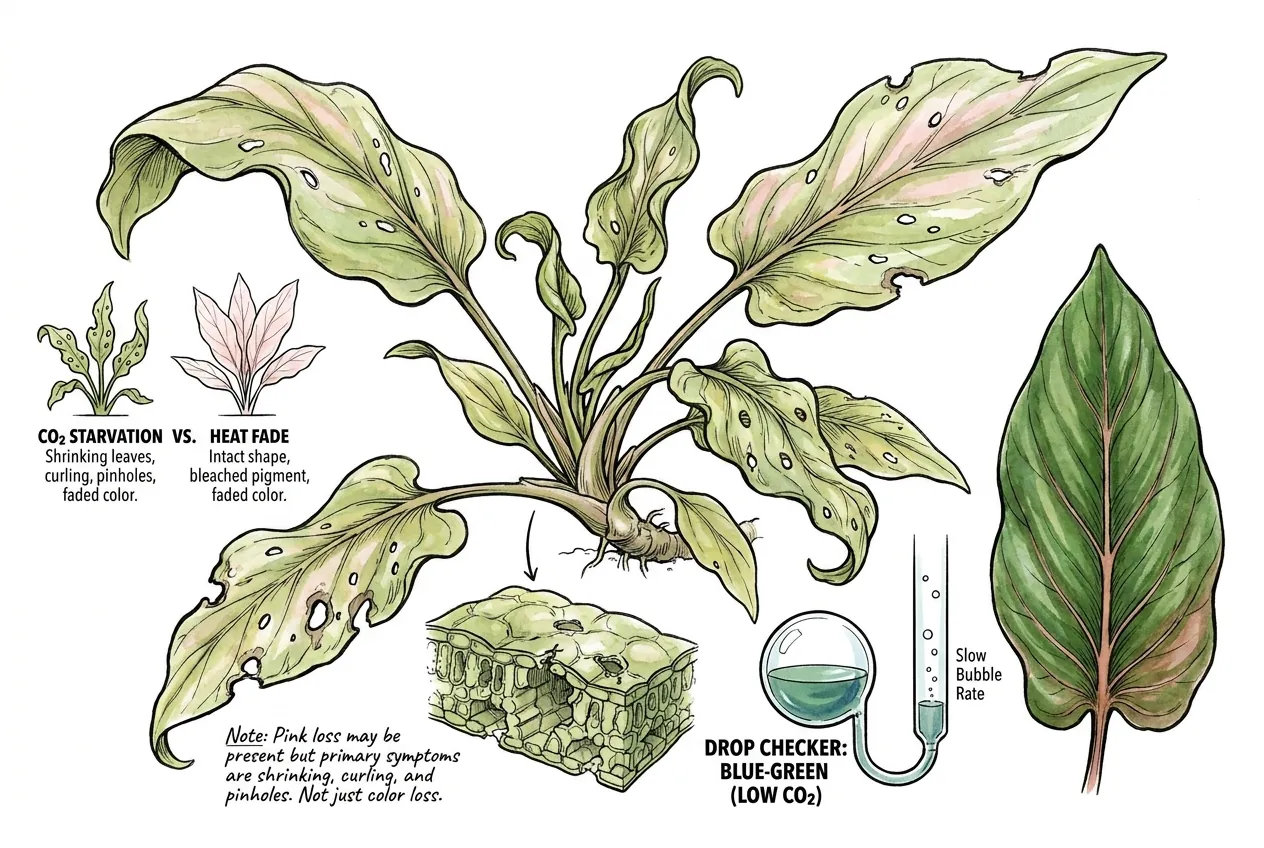
Low CO2 can slow Cryptocoryne, so new leaves may come in smaller and growth stalls. Symptoms like pinholes and melt are worth noting but are not specific to CO2 (potassium deficiency, physical damage, and acclimation can produce similar signs) so read them as part of the picture rather than a CO2 fingerprint.
A drop checker is a cheap indicator, but it lags real CO2 and depends on the reagent’s reference KH, its placement, and gas equilibration.
A lime-green reading commonly corresponds to roughly 30 ppm with a standard 4 dKH reagent, and blue suggests under-dosing, but the checker does not prove CO2 is the bottleneck or rule out heat and iron.
Note also that Flamingo’s official CO2 guidance (Dennerle) is about 10 to 20 mg/L, lower than the 30 ppm often targeted in high-tech tanks, so a high target is a choice, not a requirement for this plant.
As a rough contrast, CO2 issues more often go with smaller or distorted leaves, while heat fade can keep leaf shape while color drops.
These overlap in practice, so do not treat them as mutually exclusive.
Could the pink revert permanently?
Flamingo is described by Dennerle as a form found within a culture of Cryptocoryne wendtii ‘Brown’ and propagated by meristem (in-vitro) culture, and it was reported stable in submerged culture.
That is the sourced part.
Claims of a stable chimera, a heritable tissue-layer reversion, or a specific 32 °C multi-week trigger are not supported by published evidence. Green new growth after heat is more likely an environmental response, while persistent all-green leaves can also point to rhizome or root problems.
Rather than diagnosing a genetic reversion, judge the plant by its health. Whether the rhizome is firm, whether roots and new leaves keep coming, and whether color trends back once conditions improve.
Because Cryptocoryne is very slow and can also melt and regrow, avoid discarding a plant on a fixed number of weeks.
What Cools a Planted Tank Without Wrecking the Scape?
Match cooling to measured heat load
A clip-on fan is usually the cheapest intervention that helps. An inline chiller is more powerful and more controllable but costs more and needs plumbing.
Which you actually need depends on your tank’s heat load, your room, and how far above target it runs, so size the solution to a measured temperature rather than a rule of thumb.
How much can a clip-on fan actually drop the temperature?
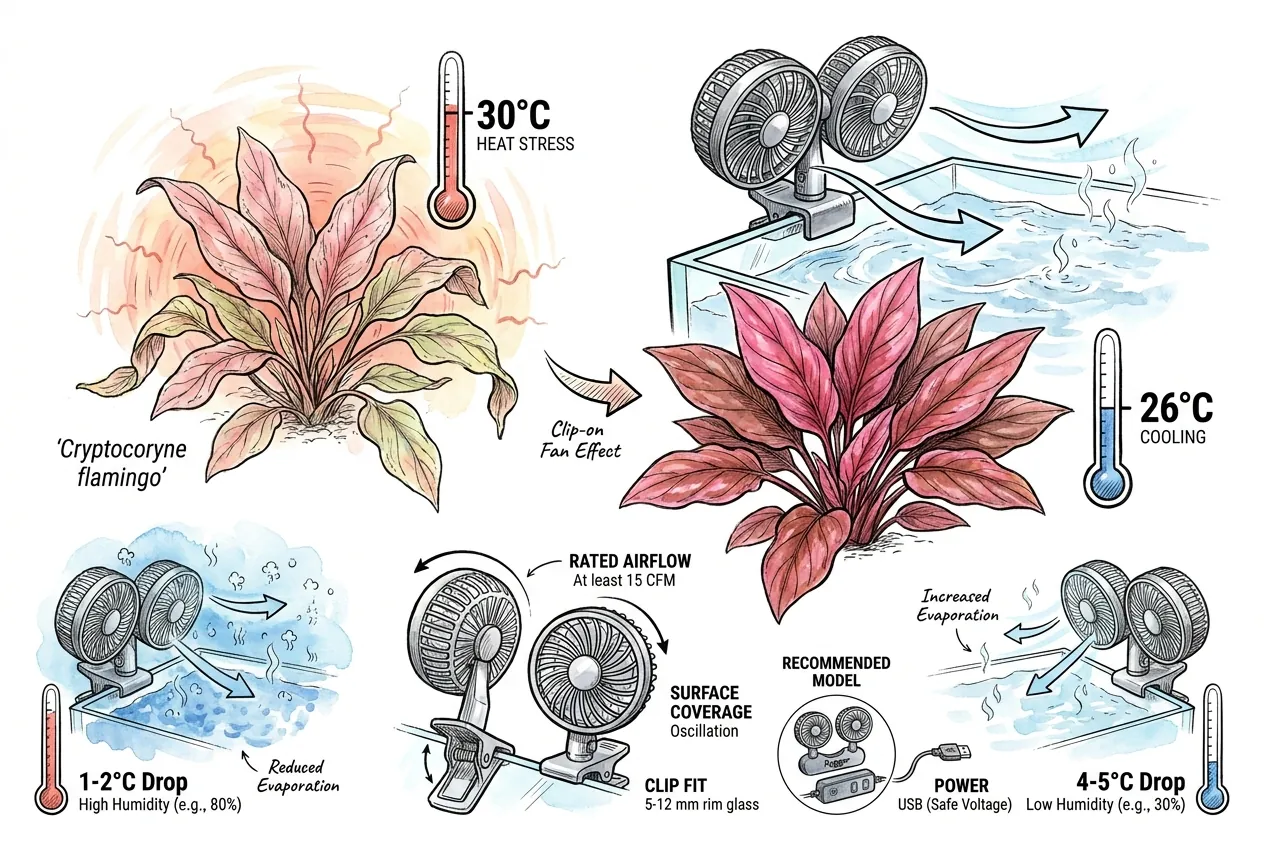
A clip-on fan blowing across an open water surface cools by evaporation and can lower tank temperature relative to room ambient.
How much it drops depends on humidity, surface area, and airflow, so treat a couple of degrees as a common range rather than a guaranteed figure, and measure your own result.
Higher humidity reduces the effect because the air holds less additional water vapor, so a fan cools more in dry air than in humid air.
The exact figures for a given climate vary. The published fan-cooling studies cited below are about human comfort, not aquarium water, so they should not be read as aquarium temperature guarantees.
A fan works best with the lid off or well open. A sealed lid with a fan on the glass does little, because the evaporative path is blocked.
What clip-on fan should I actually buy?
Useful things to check are adequate airflow for your tank size, oscillation or enough coverage for the surface, USB or low-voltage power to keep mains voltage away from the water, and a clip that fits your rim thickness.
Confirm airflow, noise, and rim range against the manufacturer’s current listing rather than a generic spec.
hygger Aquarium Chiller Fan suits a small, open tank where evaporative cooling can make a modest difference. It will not reliably correct a large temperature excess or a tightly covered tank. Confirm that its clip and airflow suit your rim and cover before buying.
Practical caveats. A single-head fan gives uneven coverage on a tank much wider than about 45 cm and may need a second unit. The clip has a maximum rim thickness (confirm the exact value on the listing) that a very thick rim can exceed, and small fans are audible in a quiet room.
The exact temperature drop is not guaranteed and depends on your conditions.
A critical review of the effectiveness of electric fans as a personal cooling intervention in hot weather and heatwaves
A Comprehensive Thermal Comfort Analysis of the Cooling Effect of the Stand Fan
When does a real chiller become worth the money?
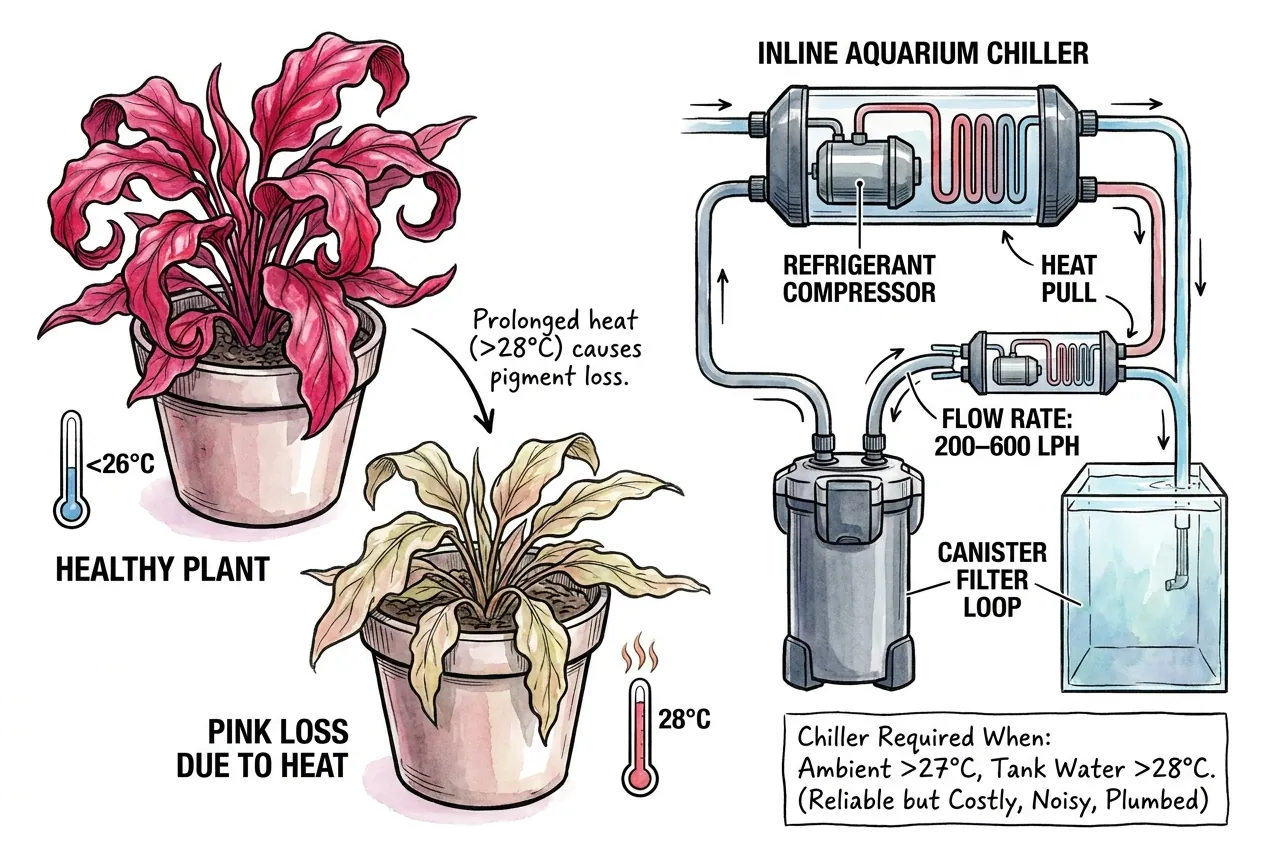
Active cooling is worth considering when room ambient routinely exceeds about 27 °C and lid-off plus a fan cannot keep the tank near your target.
Whether that point arrives depends on the tank’s heat load and surface area, not simply its volume, so treat any tank-volume rule as a rough prompt to measure, not a threshold.
Cooling units come in two types. Refrigerant-compressor chillers work like a mini-fridge and can hold temperature well but are larger, cost more, dump heat and noise into the room, and need plumbing into the filter loop.
Thermoelectric (semiconductor) coolers are smaller and quieter but generally have less cooling capacity.
Match the type and size to your measured heat load rather than assuming every unit is a compressor.
What chiller specifications matter?
Sizing charts that map tank volume straight to horsepower ignore room temperature, target setpoint, pump heat, insulation, and each unit’s rated cooling curve, so they are not a safe way to pick a chiller on their own.
Use the manufacturer’s rated tank volume and flow range for your ambient and setpoint, and confirm the chiller’s required flow (and head loss) is compatible with your pump and filter.
The Asixxsix 35L Aquarium Chiller suits a small, lightly loaded tank that needs more cooling than a fan can provide. Verify its actual cooling capacity, required flow, noise, electrical safety, and warranty before buying. It is not a solution for a large tank or a high-heat setup.
Purchasing Energy-Efficient Electric Chillers (US Department of Energy)
What about running the room AC?
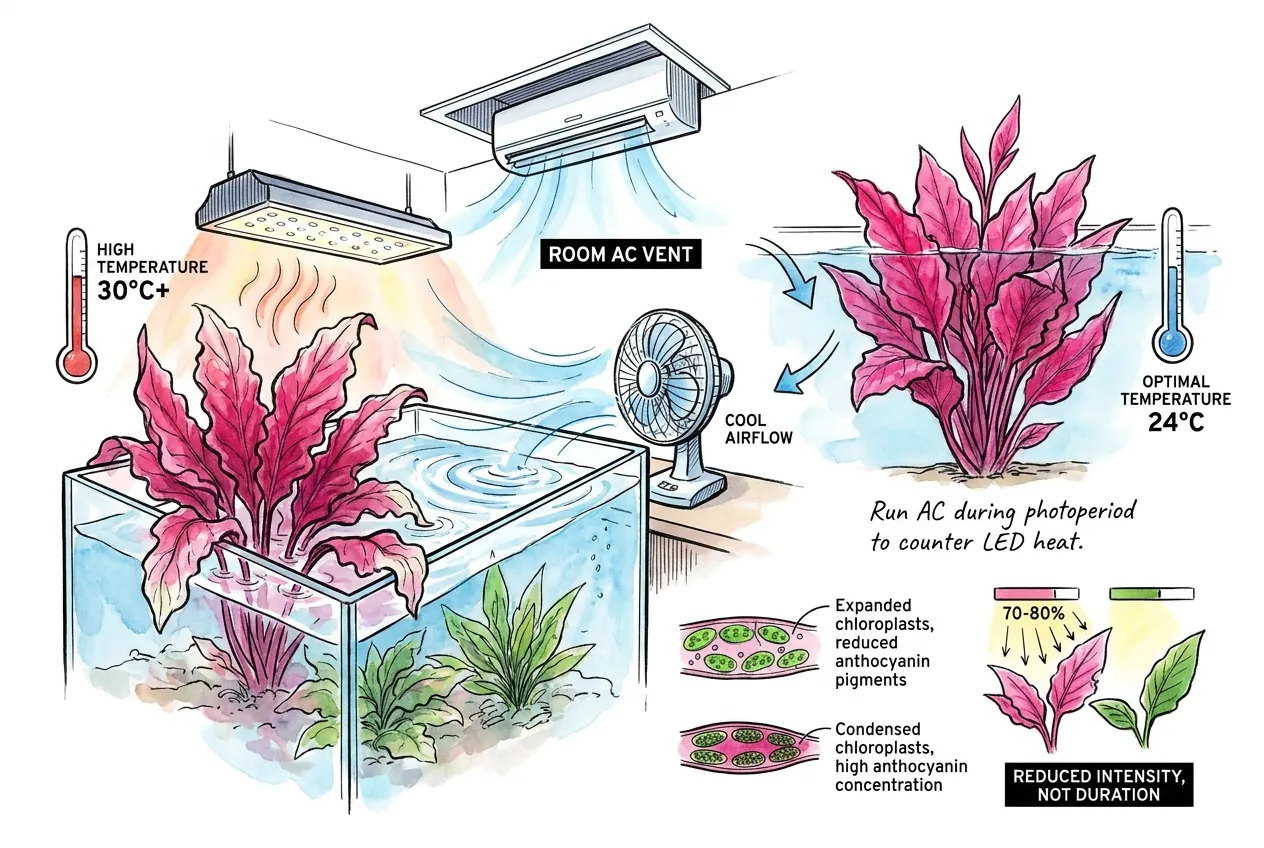
Room AC lowers ambient temperature, which lowers tank temperature, and is the least invasive option if you already run it.
It helps most when it is on during the lighting hours, when the fixture adds the most heat, not only overnight.
Combining AC with a surface fan is a reasonable approach. Cooler room air plus evaporative draw.
In a heatwave, running both often does better than either alone, though the actual benefit depends on your room and tank and is worth confirming with a thermometer.
How Do I Tune Lighting to Hold the Pink Without Cooking the Tank?
Lower delivered light before replacing hardware
Dimming the light during a heat wave can cut fixture heat while keeping useful light for pigment and photosynthesis.
How much you can dim before pink suffers depends on your fixture, depth, and plant, so treat percentages as a starting point to test rather than a fixed rule.
Whether dimming or shortening the photoperiod is better also depends on the setup. Neither is universally superior.
Does brighter light always mean more pink?
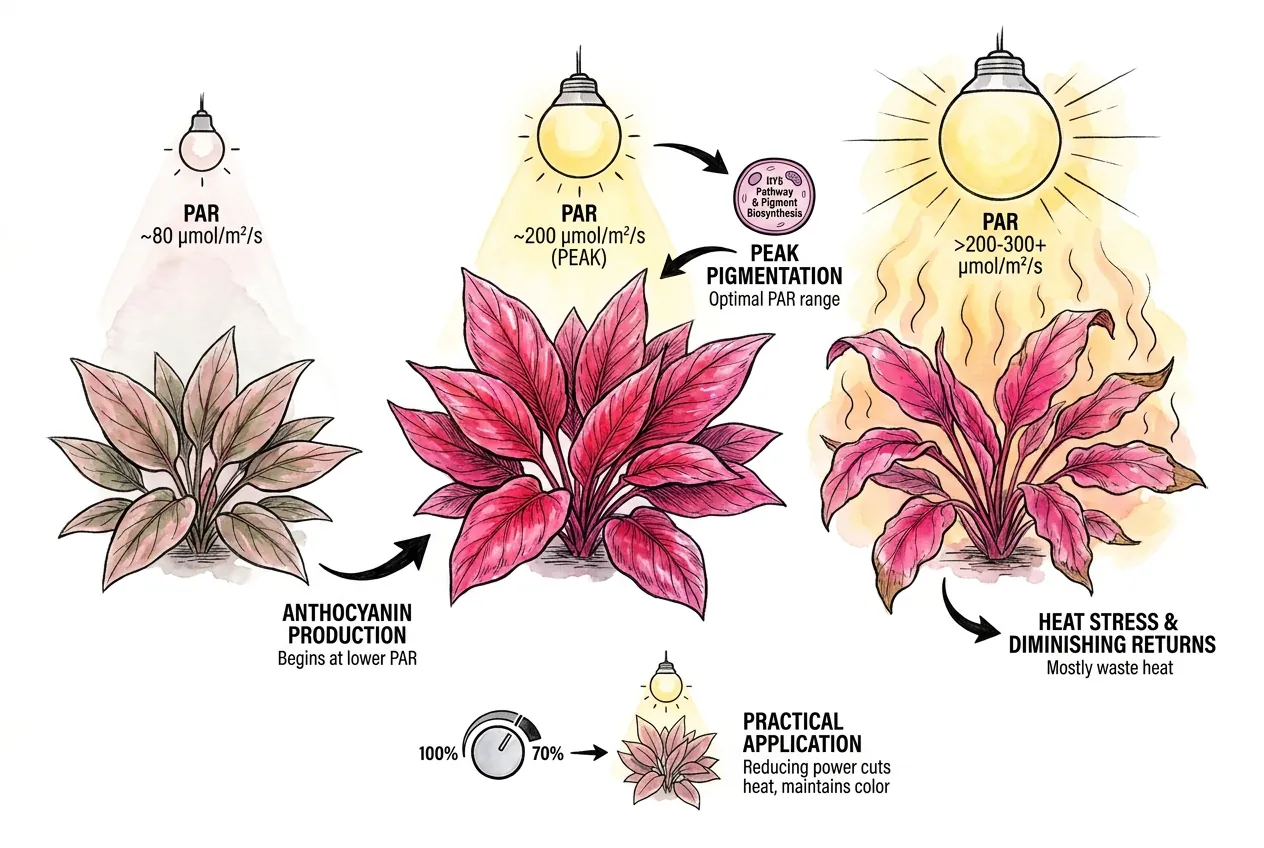
Generally yes, up to a point. Anthocyanin biosynthesis responds to light intensity through the HY5 pathway, and more light tends to mean more pigment until it saturates.
The specific numbers matter, though. The 2021 review below covers light signaling in general and does not establish that pigment production starts near 80 µmol/m²/s or plateaus at 200 across red-leaf species.
Those are not universal thresholds.
At some intensity the pigment gain levels off while extra light mostly adds heat, but where that happens depends on species, acclimation, and CO2.
Reported substrate PAR under planted-tank fixtures varies widely with the fixture, mounting height, and depth, so measure yours rather than assuming a range.
Practically, a dimmer is a useful heat-control lever. Dropping intensity during a heat wave reduces both light and fixture heat. How much pink you lose for a given cut is something to observe in your own tank rather than a fixed percentage.
Light Induced Regulation Pathway of Anthocyanin Biosynthesis in Plants
Effects of Photoperiod on Anthocyanin Biosynthesis-Related Gene Expression
Does red-spectrum lighting help without adding heat?
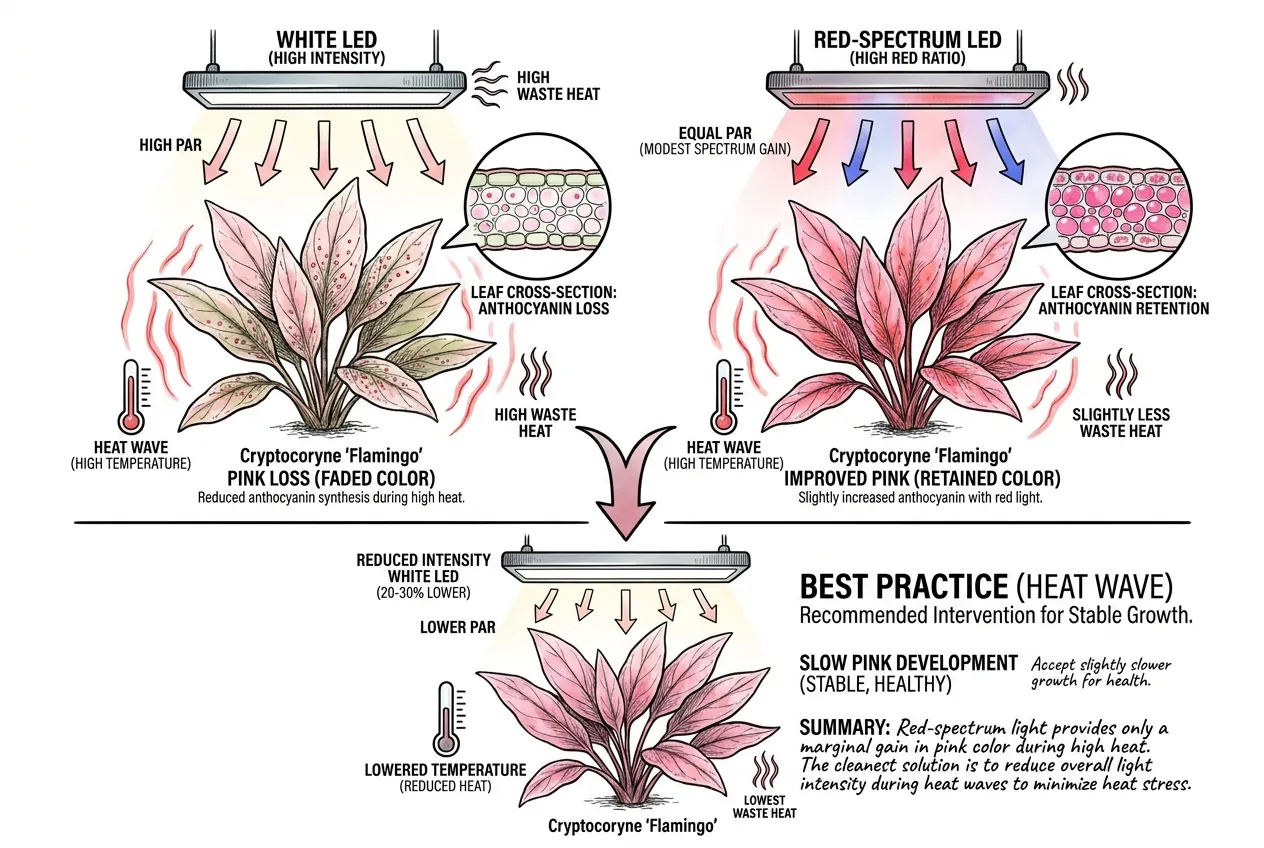
Light quality can influence anthocyanin production, and phytochrome responds to red and far-red light, but the effect of a redder fixture on this plant is not established.
It is worth correcting a common misconception here. The 2019 study often cited for the claim that red light adds pink is a postharvest experiment on cut white asparagus spears at about 30 µmol/m²/s for 3 hours, and it found that red light and UV-C suppressed anthocyanin synthesis in the spear tips.
That is the opposite of a red-boost result, and it is not an aquarium study.
So there is no good evidence that switching to a redder fixture raises Flamingo’s pink, and the specific claim of 15 to 25 percent more than white does not come from that paper.
Most planted-tank LEDs already include red channels regardless.
The simplest approach is usually to keep a working fixture, dim it during heat waves, and accept somewhat slower pink development.
Replacing a fixture for a spectrum change that is not shown to help this plant is rarely worth the cost.
Impact of light quality on anthocyanin biosynthesis in white asparagus spears after harvest
How long should the photoperiod be?
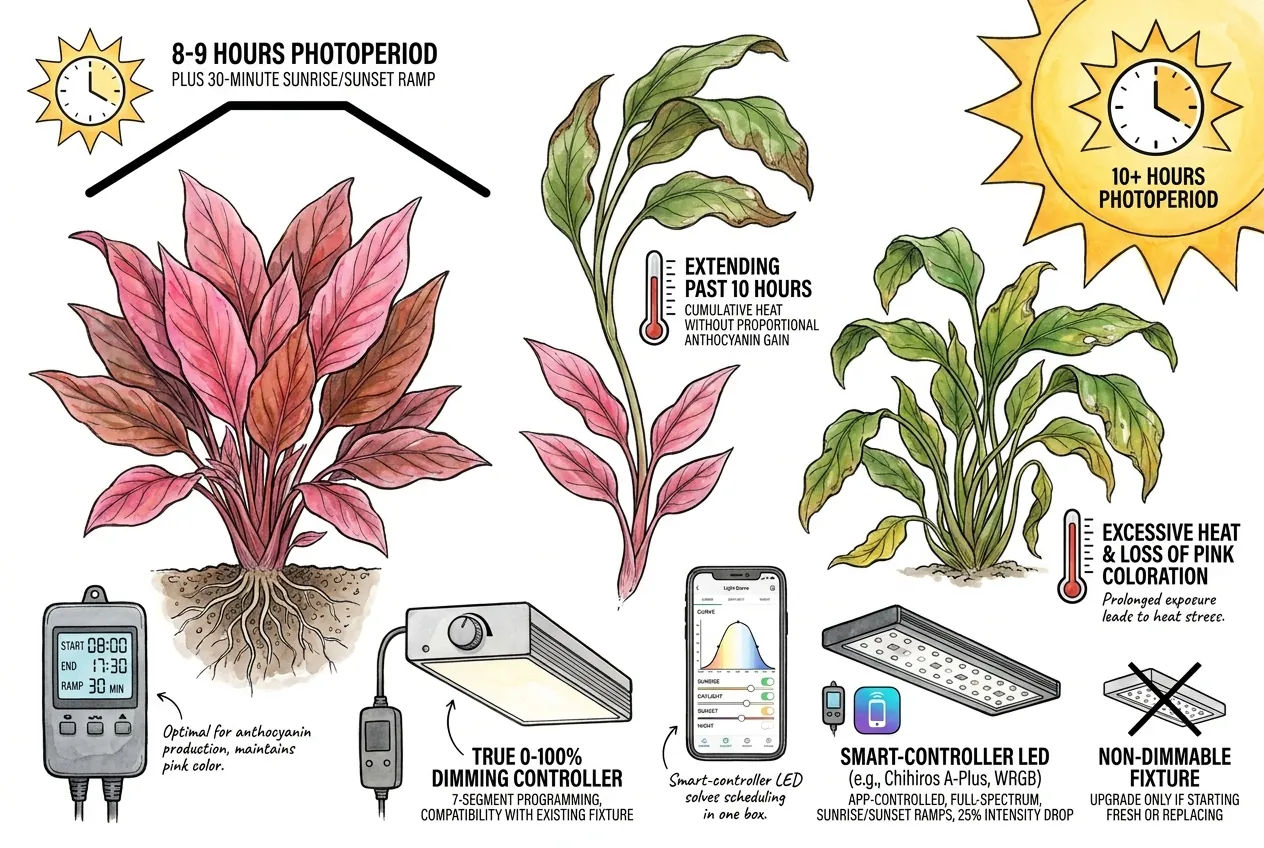
A photoperiod of roughly 8 to 9 hours (plus a short sunrise and sunset ramp) is a reasonable starting point for many planted tanks.
It is not a proven optimum, and longer periods are not automatically wasteful. The right length depends on your plants, algae balance, and total daily light.
Adjust based on what you see rather than a fixed number.
What dimmable controller should I use?
Useful features are smooth dimming across the full range, sunrise and sunset ramps, a programmable schedule, and compatibility with your existing fixture.
If you do not already own a dimmable fixture, a smart-controller LED handles the scheduling in one box. App control, ramps, and an easy seasonal intensity reduction during hot months.
When to upgrade vs. Keep your fixture
Replacing the fixture is overkill if your current LED is fine. If you already own a Chihiros A-Plus or WRGB, the in-app controls handle dimming without buying anything new.
Upgrade only if you are starting fresh or replacing a non-dimmable light.
What Nutrient Regime Supports New Pink Leaves Once the Tank Is Cool?
Confirm a deficiency before adding iron
Once temperature is under control, nutrition is worth checking. Some enzymes in the flavonoid and anthocyanin pathway do use iron. F3H and ANS/LDOX are Fe(II)-dependent 2-oxoglutarate dioxygenases, which are a different enzyme family from the cytochrome P450 hydroxylases, so describing this as iron-dependent through cytochrome enzymes is not accurate.
Cryptocoryne also feeds substantially through its roots. None of this means iron is automatically the next bottleneck. Confirm a deficiency before dosing for color.
Which iron chelate works best for Cryptocoryne?
Different iron chelates hold up over different pH ranges, which affects how available the iron stays in a given tank.
As a general rule, EDTA loses effectiveness above roughly neutral pH, DTPA holds to somewhat higher pH, and EDDHA holds higher still (but is rarely used in aquariums because it tints the water reddish).
Column-dosed iron gluconate acts quickly but does not persist long. In harder tap water, a DTPA form is a sensible default.
The University of Florida Extension iron-chelate publication is the source for that pH chemistry, but it is written for soil and fertigation, so its pH ranges are a guide rather than a direct prescription for a submerged root zone.
It does not say which chelate is always best for aquatic Crypt.
What iron-rich liquid fertilizer is worth dosing?
A liquid iron or trace fertilizer with a chelated iron form and a balanced set of trace micros (manganese, boron, zinc, and copper) is a reasonable choice.
Use each product’s stated iron content and dose rather than an invented minimum percentage. The two products below, for example, have quite different iron concentrations.
Seachem Flourish Iron suits a confirmed iron shortfall in the water column. Follow the current label and test as directed. Do not use it as a guaranteed way to restore pink color.
Gluconate iron is a fast-acting form that does not persist long, so dosing and testing around lights-on makes sense.
If you want steadier background iron, a DTPA-based product can complement it, but only dose to a confirmed need.
Tropica Growth Fertiliser suits a tank with few or slow-growing plants and enough fish load to supply nitrogen and phosphorus. It provides trace nutrients but is not a complete macro fertilizer, so follow the current label and do not use it as a substitute when the tank also lacks nitrogen or phosphorus.
Because it carries no nitrogen or phosphorus, Premium Nutrition does not replace a complete macro fertilizer.
And because Cryptocoryne feeds heavily through its roots, root tabs or nutrient capsules (for example Tropica’s substrate capsules, marketed for strong-root plants) are worth weighing alongside water-column iron rather than stacking two column products by default.
Understanding and Applying Chelated Fertilizers Effectively Based on Soil pH (UF/IFAS HS1208)
What CO2 level supports anthocyanin production?
High-tech tanks often target around 30 ppm CO2 during the photoperiod, but that is a hobbyist convention, not a requirement for this plant. Flamingo’s official CO2 guidance (Dennerle) is about 10 to 20 mg/L. Very low CO2 can slow growth, but there is no Flamingo-specific evidence that pigment lags below a set number.
A drop checker is a cheap indicator. With a standard 4 dKH reference reagent, lime green corresponds roughly to 30 ppm and blue suggests less. It lags real CO2 and is not exact.
Whether a given CO2 level stresses livestock depends on the actual dissolved CO2, oxygen, pH, and species, so measure and watch behavior rather than treating a single color as automatically dangerous.
The idea that above 40 ppm algae simply outcompete plants is not a general rule either. Algae and plant competition depend on light, nutrients, grazing, and pH, and higher CO2 can favor plants in some setups.
CO2 supports overall carbon assimilation, which can indirectly support secondary metabolism.
A direct link between more CO2 and more pink in Flamingo has not been shown, though low-tech tanks do often grow it more slowly.
What about trace elements beyond iron?
Manganese, boron, copper, and zinc are all plant micronutrients, and deficiencies can hurt growth and pigmentation.
It is an overstatement to say each is a direct cofactor of anthocyanin biosynthesis. Their specific roles and required amounts in an aquatic plant like this are not established.
A complete, balanced trace fertilizer is a reasonable way to avoid deficiency without micromanaging individual elements.
The practical point stands even without a specific citation. Dose a complete trace mix on a schedule and avoid dosing isolated micros, which can throw ratios out of balance and, at excess, cause toxicity.
There is no need to invoke a specific boron study to justify a balanced trace routine.
Anthocyanins, Factors Affecting Their Stability and Degradation
How Do the Pink Cryptocoryne Varieties Compare?
Separate names from measured traits
Before ranking cultivars by heat tolerance, sort out the trade names. According to Aquasabi, ADA considers Flamingo and Pink Panther the same plant sold under different names, so they should not be assigned separate heat thresholds or pigment chemistry.
Why there is no reliable heat-tolerance ranking
No peer-reviewed pigment analysis establishes a heat-tolerance ranking for Flamingo, Flamingo Mini, Pink Panther, or Rosanervig. Flamingo and Pink Panther may be the same plant sold under different names, so verify the identity of any variety with the seller instead of assuming a trade name predicts heat response.
Do faded leaves turn pink again after cooling?
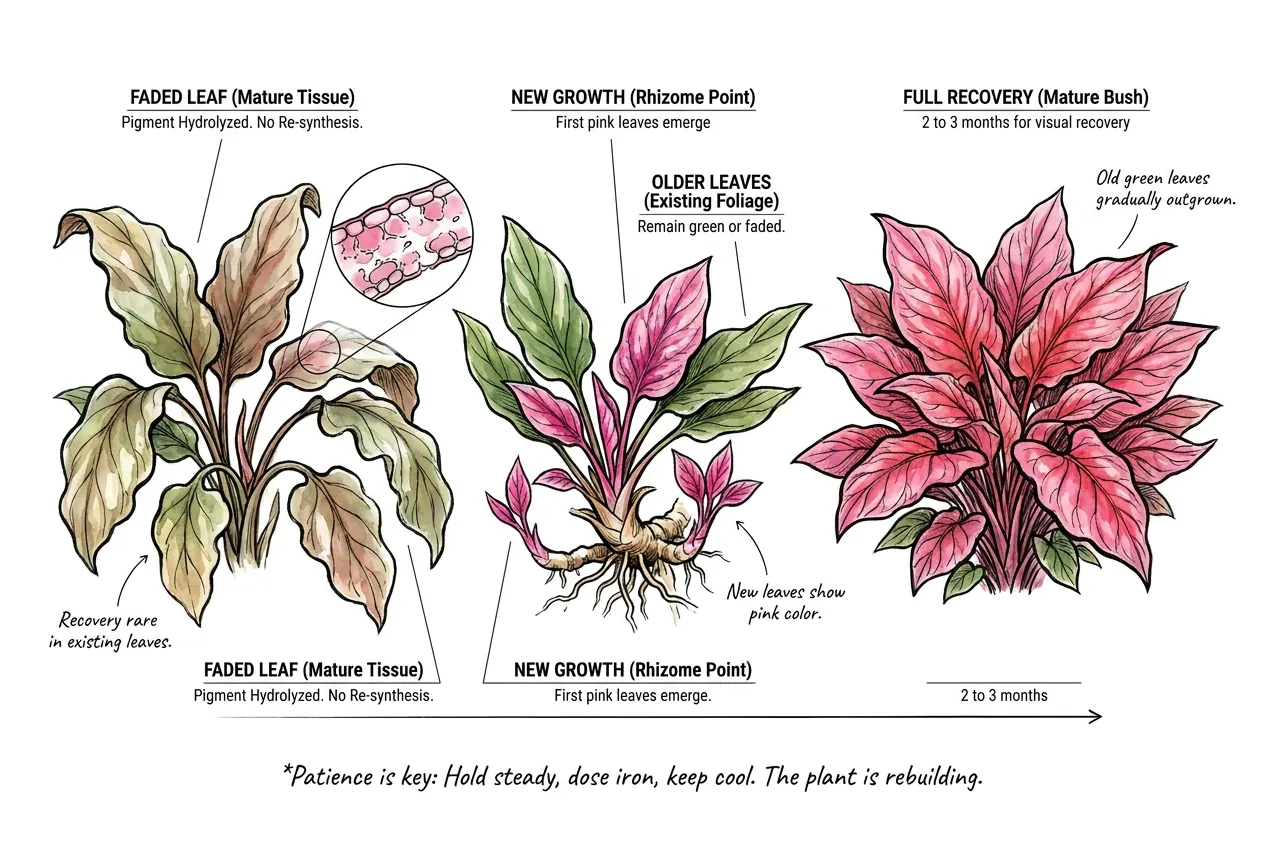
Once-faded leaves often do not regain their pink, so watch new growth from the rhizome for signs of recovery rather than expecting old leaves to re-color.
(The idea that mature tissue can never re-synthesize anthocyanin is a general assumption, not a documented fact for Cryptocoryne.)
After conditions stabilize, new pink leaves may appear over a few weeks and fuller recovery over a couple of months, but Cryptocoryne is very slow and these timelines vary a lot with temperature, light, rhizome health, and whether the plant is also recovering from melt.
Use them as loose expectations, not deadlines.
A common mistake is changing every parameter after a couple of weeks. It is usually better to hold conditions steady, correct any confirmed deficiency, keep temperature in range, and give a slow plant time.
When should I just replace the plant?
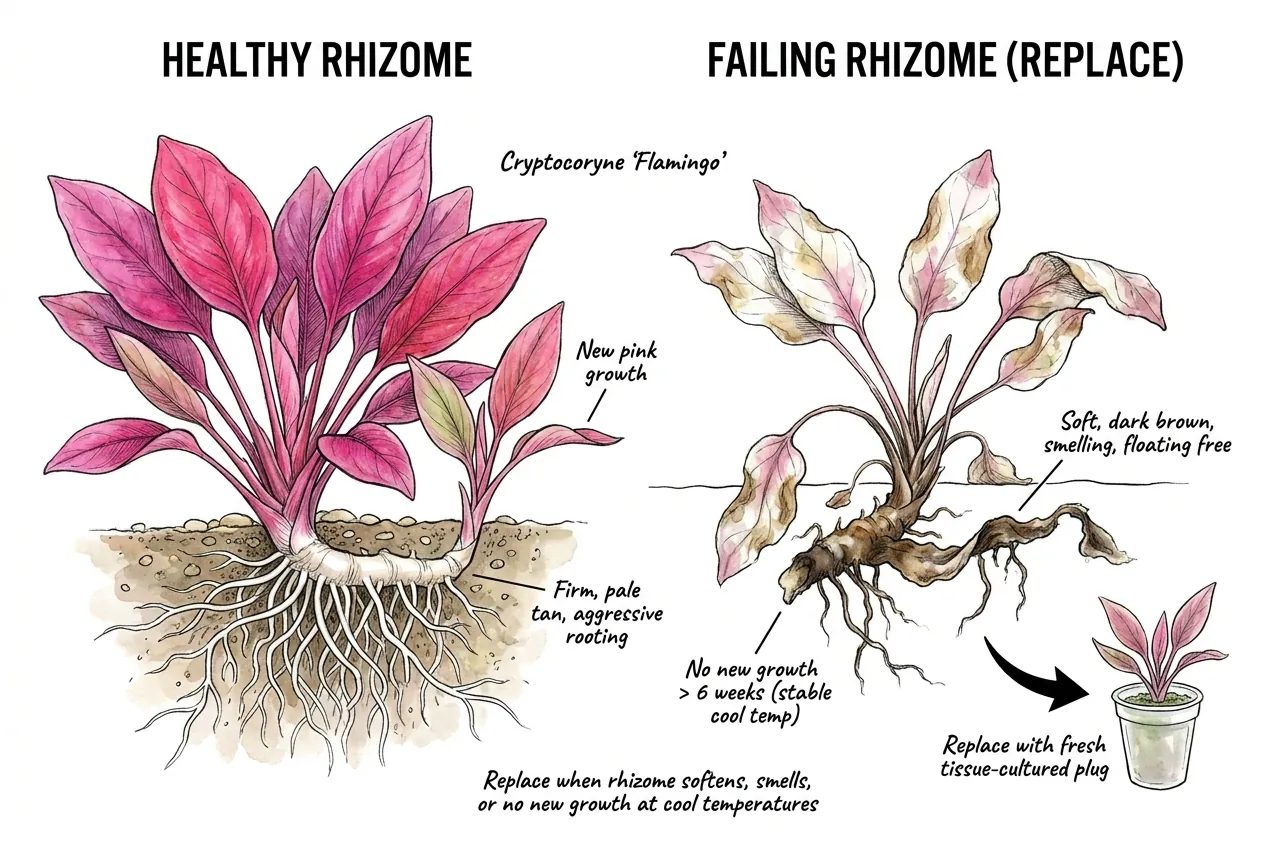
The clearest sign to replace is the rhizome itself. If it softens or smells, that points to rot, which lighting and cooling will not fix.
Prolonged stalled growth despite stable, in-range conditions is also a concern, but because Cryptocoryne is slow and can melt and regrow, treat a few weeks with no growth as a prompt to look harder at temperature, acclimation, and substrate rather than an automatic deadline to discard the plant.
A healthy Flamingo rhizome is firm, off-white to pale tan, and roots well into the substrate. A failing one turns brown and soft and can float free.
If the rhizome has clearly rotted, replacing it with a fresh tissue-cultured plug is usually more productive than continuing to dose a plant that is not going to recover.
Environmental and Phytohormonal Factors Regulating Anthocyanin Biosynthesis in Fruits
Key Takeaways
- Flamingo’s official care range tops out at 28 °C. Pink often fades as a tank warms, but no study has measured a temperature threshold in this plant, and the heat-and-pigment mechanisms here are borrowed from other species.
- Faded mature leaves generally do not re-color. Watch new growth from the rhizome. Recovery timing varies with plant health rather than a fixed number of weeks.
- A clip-on fan with the lid off can cool a tank by evaporation. The amount depends on humidity, airflow, and surface area, so handle jumping stock, evaporation, humidity, and electrical safety before running lid-off.
- Treat color loss as a differential diagnosis. Heat, iron and other nutrients, CO2, light, acclimation, and rot can overlap, so dose iron only for a confirmed deficiency and follow the product’s official dose.
- Flamingo and Pink Panther appear to be the same plant according to ADA via Aquasabi. Do not choose between them on a supposed heat-tolerance difference.
Affiliate Disclosure
This article contains Amazon affiliate links. As an Amazon Associate I earn from qualifying purchases. If you use these links, the site may earn a commission at no extra cost to you. Product availability, price, and specifications can change. Check the current listing before buying.