
Kalettes Growing Guide: Winter Harvest Tips
A Kalettes growing guide for a sweet winter harvest: what this kale x Brussels sprouts cross needs (long-season timing by region, wind support on exposed sites, lean nitrogen, clubroot rotation, and bottom-up picking after frost).
Marcus Hale · Published 2026-01-26 · 10 min read
Key Takeaways
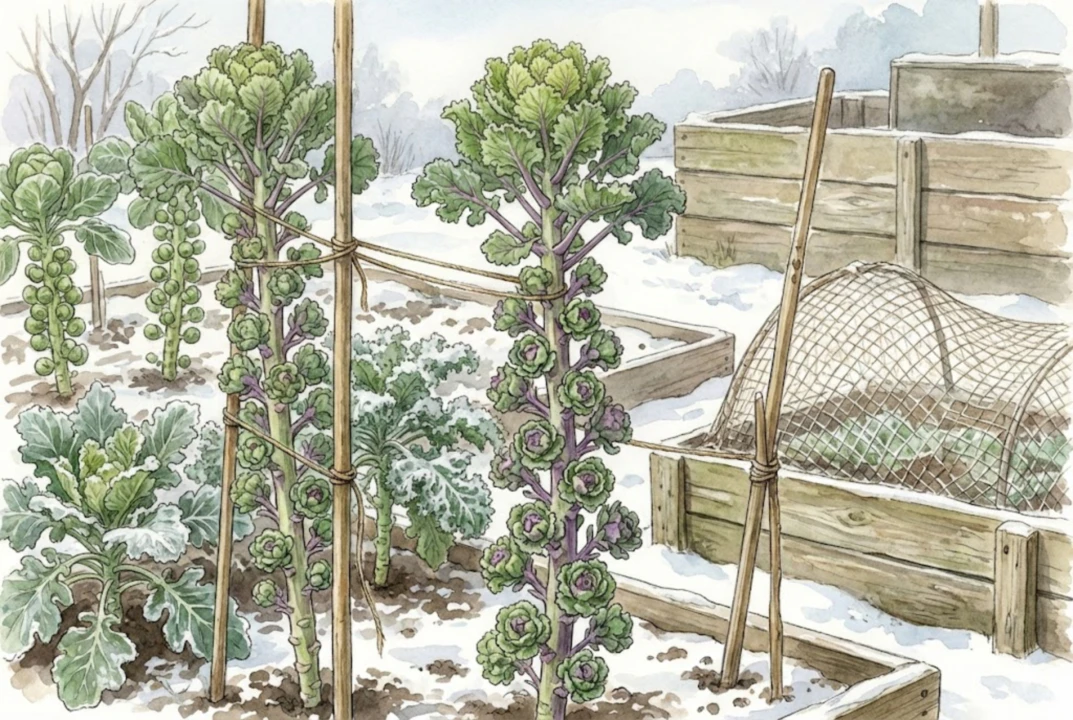
- Kalettes® are a non-GMO kale × Brussels sprouts cross from Tozer Seeds. They grow on a tall stalk that produces frilly little rosettes in the leaf axils instead of tight sprouts.
- They are a long-season crop. Start seeds indoors about 4-6 weeks before your transplant date, not before last frost, and expect a late cultivar to hold garden space for much of a year before a winter harvest.
- Tall, top-heavy plants can rock in winter wind, especially on exposed or wet sites. Consider staking or firming and earthing-up the base at planting time.
- Feed lean and rotate. Excess nitrogen, roughly below what you would give Brussels sprouts, pushes leafy growth over florets. A soil test guides pH and phosphorus, and rotating away from other brassicas reduces clubroot risk without eliminating it.
- Harvest from the bottom up. Lower florets mature first, and a light frost tends to improve flavor, so pick at roughly 1.5-2 inches. Roasting or sauteing suits their small size, though steaming and a short boil work too.
What Is a Kalette?
How the Plant Differs
Developed by Tozer Seeds in the UK, Kalettes® are a cross between kale and Brussels sprouts.
Kalettes® is a registered trade name for this cultivar group, not a generic vegetable name.
They are not genetically modified. They are the result of traditional breeding worked on over about 15 years, according to the breeder’s background.
The plant grows tall like a sprout stalk but produces open, frilly rosettes in the leaf axils instead of tight balls.
Seasonal Varieties
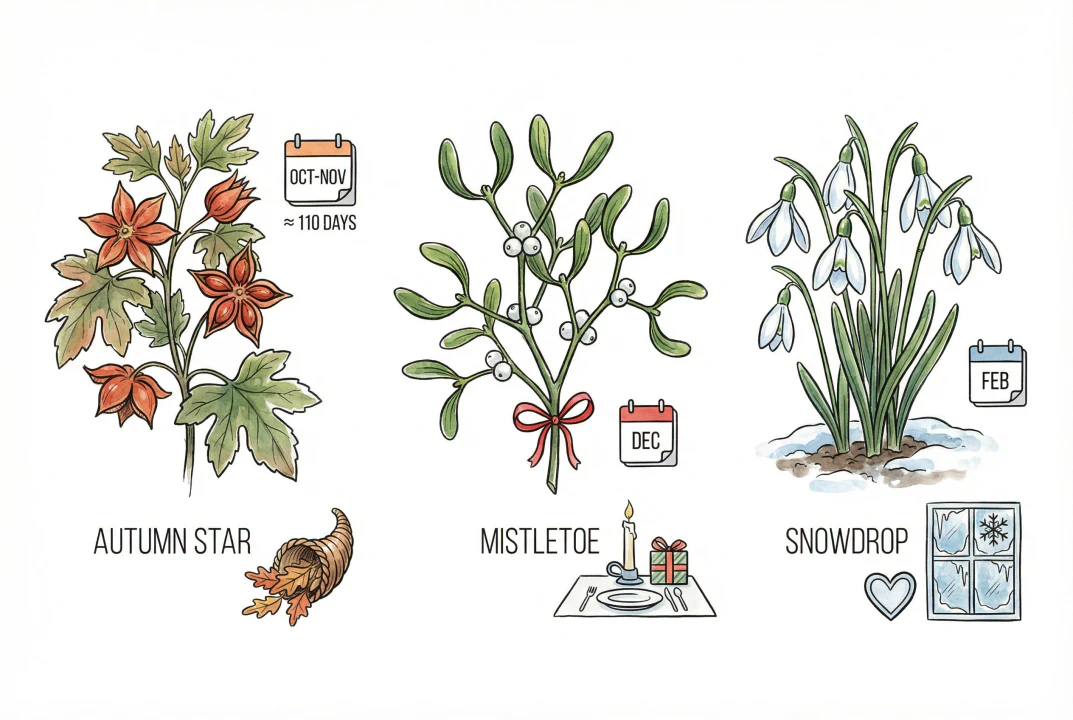
Depending on your sowing and transplant dates and your climate, planting an early, mid, and late variety can spread the harvest across autumn and winter.
- Autumn Star. The earliest of the three, for autumn harvests. Days to maturity depend on the source and where the count begins. Older Johnny’s figures put Kalettes at roughly 110-138 days from transplant, while current Tozer listings give Autumn Star around 180 days.
- Mistletoe. A mid-season variety typically ready around the holiday period (Tozer lists roughly 240 days), with timing varying by location.
- Snowdrop. The most winter-hardy of the three, maturing into January or February (Tozer lists roughly 300 days).
Growth Habit
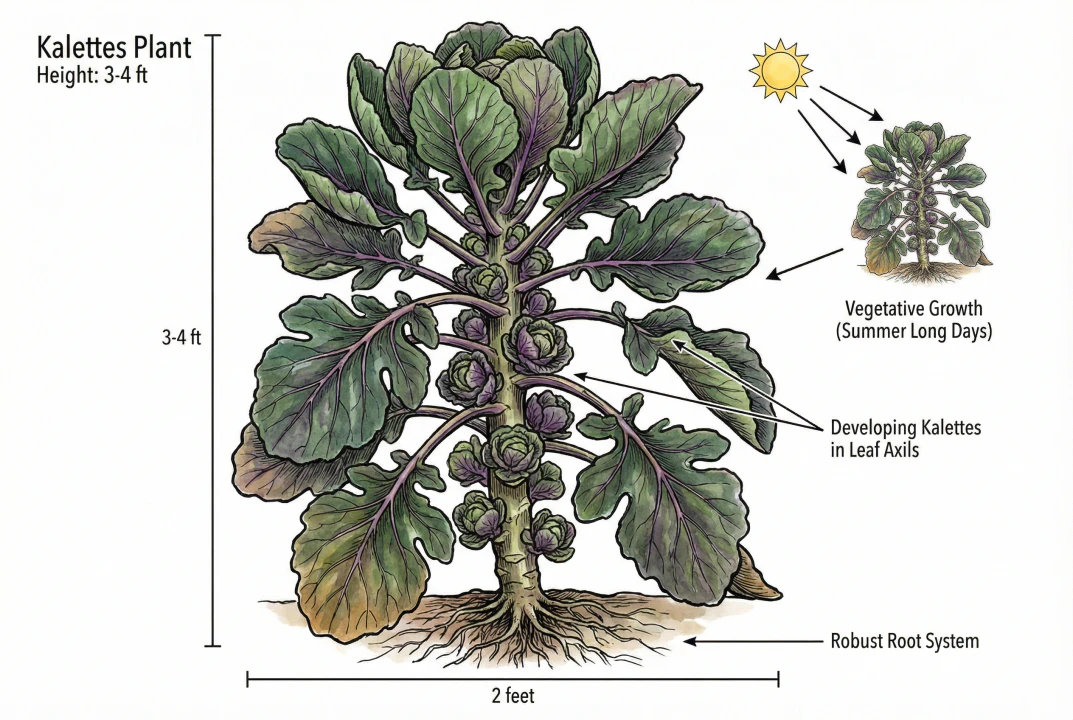
These are large plants. Reported heights vary by cultivar and source, from about 75 cm in the RHS profile to 2-3 feet in Johnny’s guidance, and taller on some sites. Width is often around 2 feet.
The plant builds a tall vegetative frame through the summer, and the crop develops later in the leaf axils along that stalk.
Cultivation Fundamentals
Plan the Long Season
Establishing Kalettes requires patience. Late cultivars such as Snowdrop can occupy the bed for much of a year, while earlier varieties finish sooner, so plan bed space by the specific variety’s days to maturity.
Timing Your Start
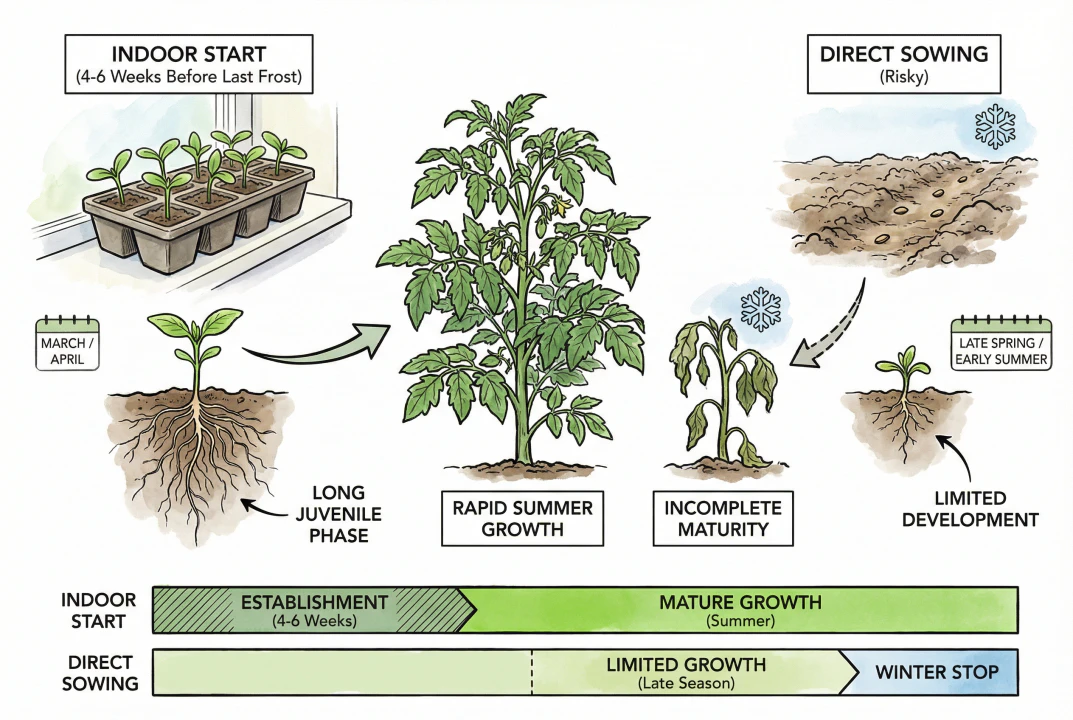
Start seeds indoors about 4-6 weeks before your intended transplant date, not before last frost.
Johnny’s directs sowing 2-3 seeds per cell about 1/4 inch deep in plug trays for transplanting.
Transplant timing depends heavily on region. Johnny’s examples run from mid-May to early June in the North and Midwest, June-July in the Mid-Atlantic, August in California, and September in the Deep South, so work back from your target harvest and expected first hard freeze rather than a single national date.
Establishing a good root system before summer helps the plant carry its later crop.
Direct sowing is possible, but transplants are usually recommended so plants have time to mature before cold weather slows growth.
Soil and Spacing
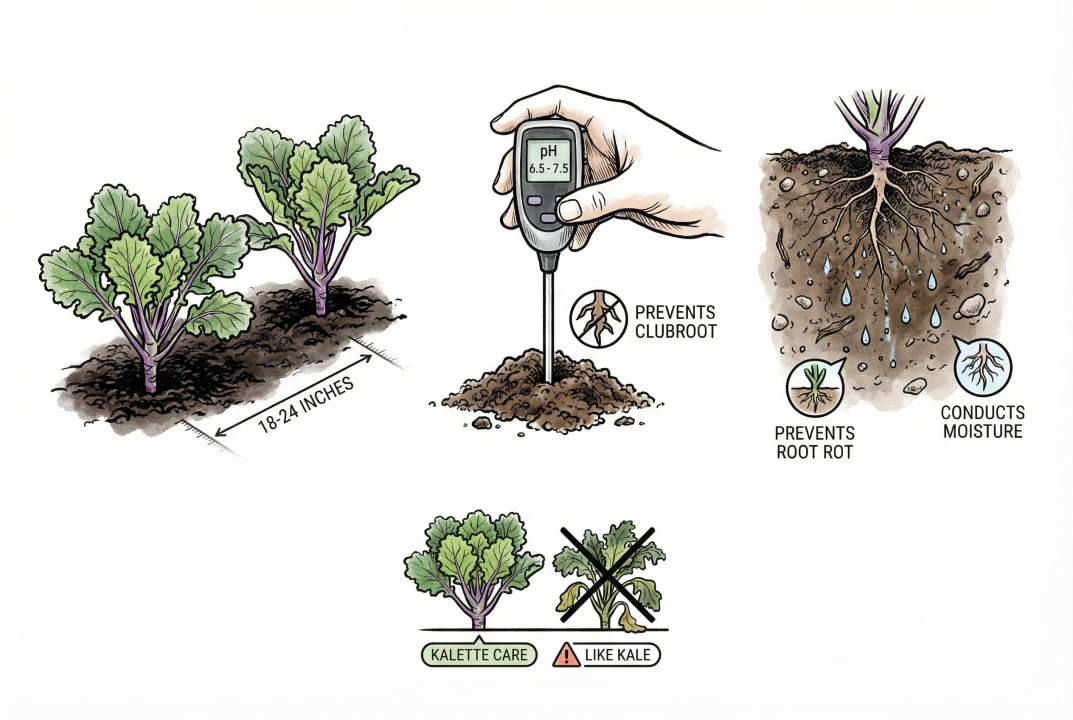
Generous spacing improves airflow, which can reduce some foliar disease, though disease pressure also depends on climate and cultivar size.
- Spacing. Johnny’s suggests plants about 18 inches apart in rows about 24 inches apart. The official UK guide spaces them wider, 60-80 cm.
- pH. A soil pH around 6.5-7.5 suits these crops. Keeping pH toward neutral can help reduce clubroot risk, but it does not prevent the disease. Use a soil test to guide any lime.
- Texture. Rich, moist but well-draining soil supports healthy roots. It reduces, rather than guarantees against, root problems.
Maintenance and Care
Support the Tall Frame
Kalettes are not simply tall kale. Their care is closer to Brussels sprouts, and the height changes how you support them.
Supporting Tall Plants
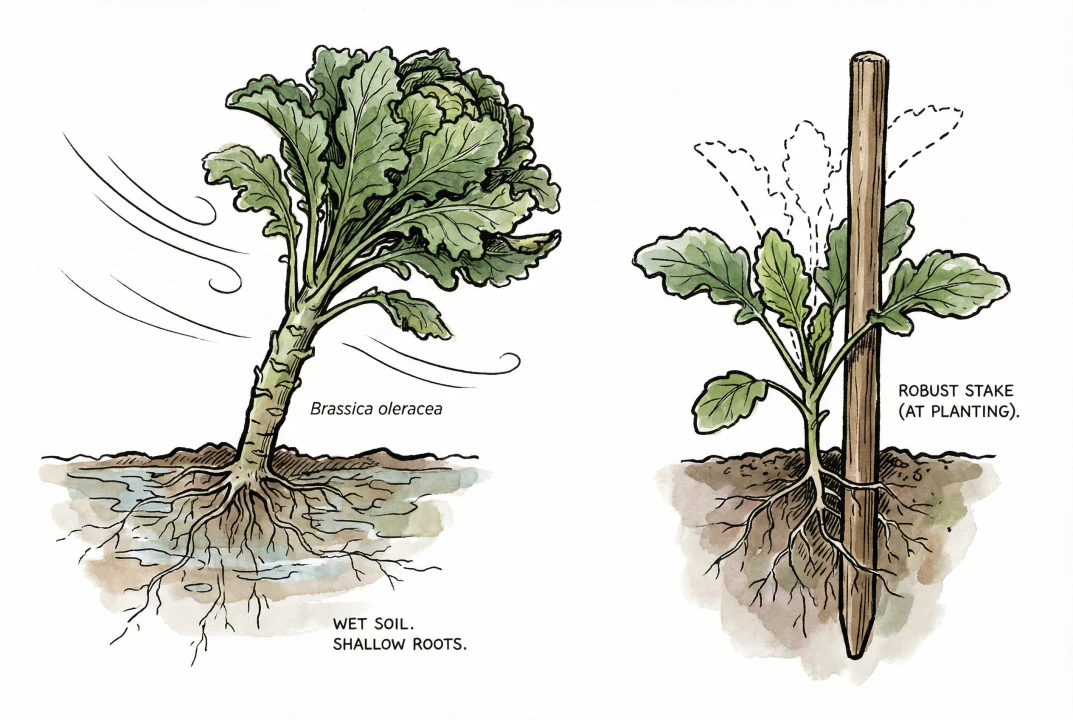
Tall, top-heavy plants can catch the wind and rock in winter, especially on exposed sites.
On wet or loose soil the roots may not hold a heavy stalk steady, so windrock is a real risk in those conditions rather than a certainty for every plant.
Where a site is exposed or the plants are very tall, the RHS notes staking or earthing-up the base may be needed. Firming the soil at planting and, if you stake, driving it in early away from the rootball reduces later root damage.
Feeding Regime
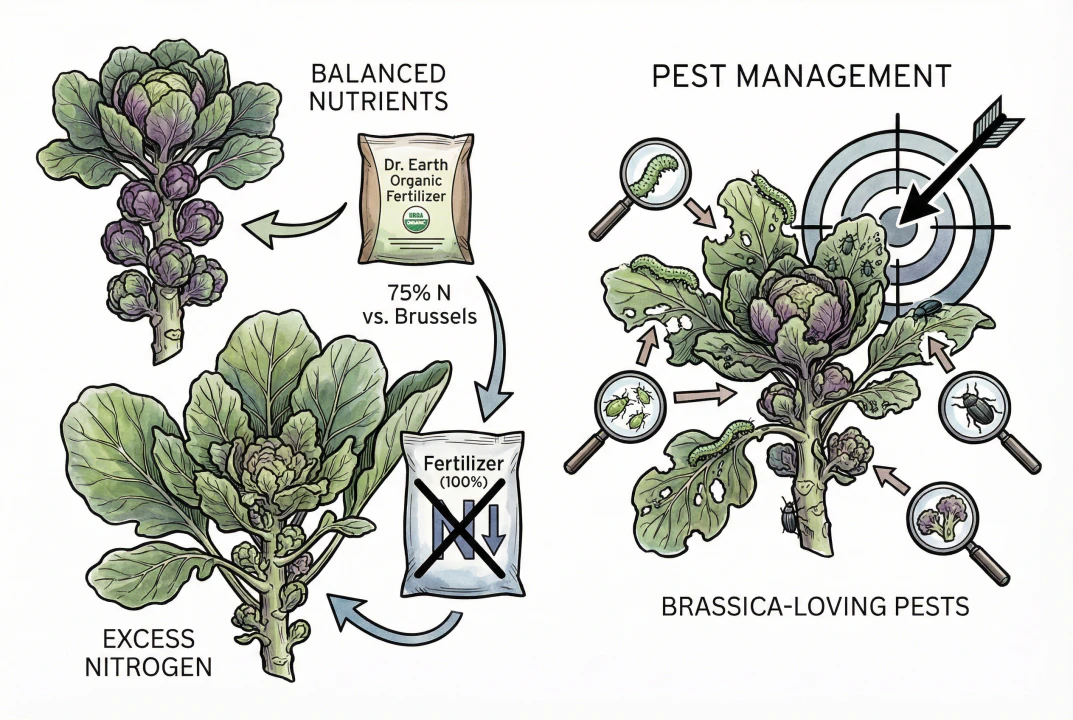
Go easy on the nitrogen.
Excess nitrogen pushes leafy growth at the expense of firm florets. Johnny’s suggests about 75% of the nitrogen you would give Brussels sprouts, but that is a relative figure. Start from a soil test and your local Brussels-sprout nitrogen rate, subtract residual soil nitrogen, and split the feed with a side-dressing rather than applying a fixed amount.
Watch for both deficiency (pale, weak growth) and over-feeding (loose, leafy plants).
Dr. Earth Natural Wonder is formulated for fruit trees, berries, and fruiting vines rather than vegetables, so it is not the automatic choice for a Kalettes bed.
Use a fertilizer only when the soil test calls for it, and favor a lower-phosphorus vegetable or all-purpose option if the bed already has ample phosphorus. If you use this product, base the amount on its guaranteed analysis and your soil test rather than treating its ratio as a Kalettes recipe.
Pest and Disease Management
Start With Prevention
Kalettes are susceptible to the usual brassica pests, though which ones show up depends on your region and season.
The Caterpillar Defense
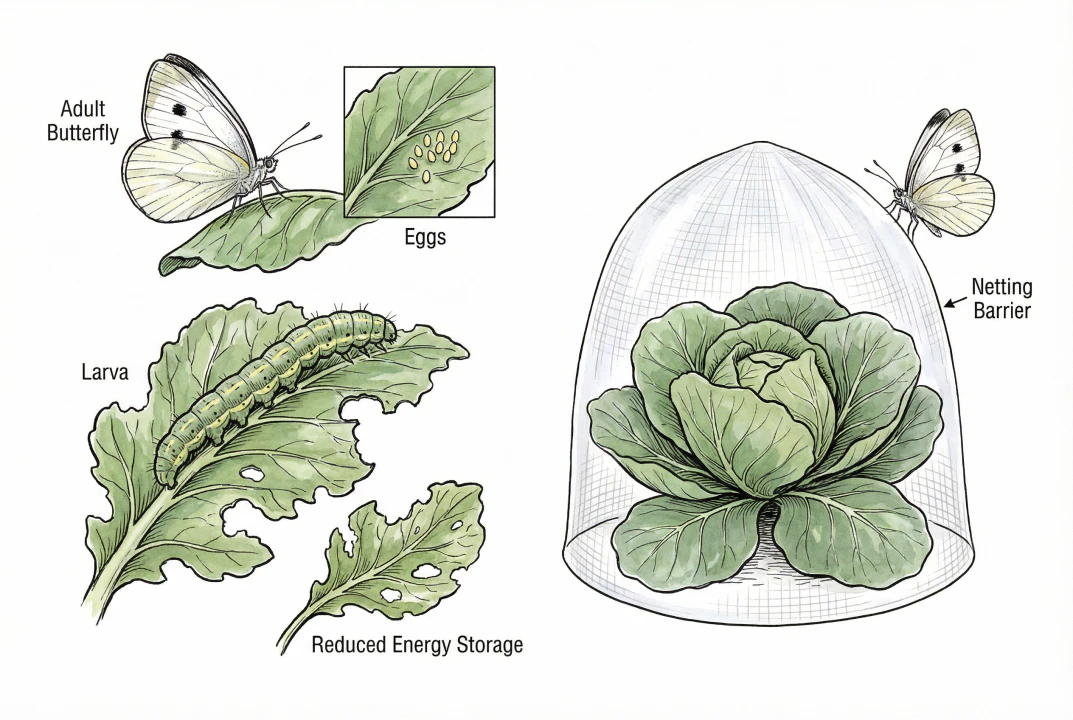
Cabbage white butterflies (imported and large whites) lay eggs that hatch into leaf-eating green caterpillars. The imported cabbageworm lays single eggs, the large white in clusters.
Larvae reduce leaf area and so the plant’s ability to grow and fill out. A fine floating row cover or insect mesh is one of the most reliable preventatives when it is installed at transplanting, sealed at every edge, and put over plants that are already pest-free. Scouting, handpicking, natural enemies, and Bacillus thuringiensis (Bt) are other options.
Clubroot Prevention
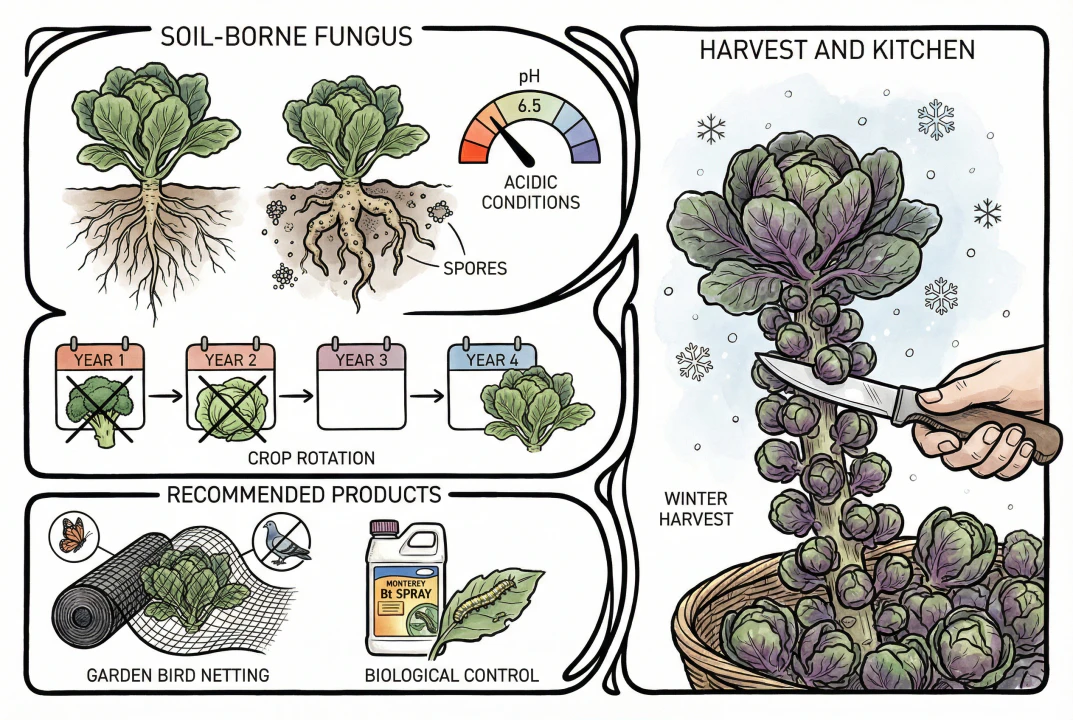
Clubroot is caused by Plasmodiophora brassicae, a soil-borne obligate parasite (a protist, not a fungus) that produces root galls and can stunt plants, more or less severely depending on the level of infection.
Resting spores can survive in soil for many years and are worse in acidic, wet conditions.
Keeping pH toward neutral and rotating out of brassicas both reduce risk but do not eliminate the pathogen.
Extension guidance (OSU) points to rotations of roughly 4-8 years out of brassicas, avoiding known-infested ground, controlling brassica weeds, using clean transplants, and cleaning tools and soil off equipment. A four-year gap alone is not a guarantee on infested soil.
Match the mesh to the target. Ruolan Garden Netting has openings suitable for deterring larger animals, not cabbage white butterflies.
Choose fine insect mesh or lightweight row-cover fabric for caterpillar prevention, and use coarse netting only where birds or larger animals are the problem. Keep any netting taut on a frame and check it regularly, because loose plastic mesh can entangle wildlife.
If caterpillars get through, Monterey insect spray is a spinosad concentrate labeled for cole crops and imported cabbageworm. It fits a confirmed caterpillar problem after physical exclusion and handpicking are no longer enough, not a routine preventive spray.
Follow this product’s current label for mixing, interval, seasonal maximum, and pre-harvest timing. Spinosad can harm bees and aquatic invertebrates, so avoid open flowers and waterways. For a small home garden, targeted Bt, handpicking, and row cover may be the better first choices, and a gallon of concentrate may be more than you can use safely before it ages.
Clubroot (Plasmodiophora brassicae) Control Strategies on Brassicas | Oregon State University
Harvest and Kitchen
Wait for the Winter Window
The winter harvest is the payoff for the long season.
Bottom-Up Harvesting
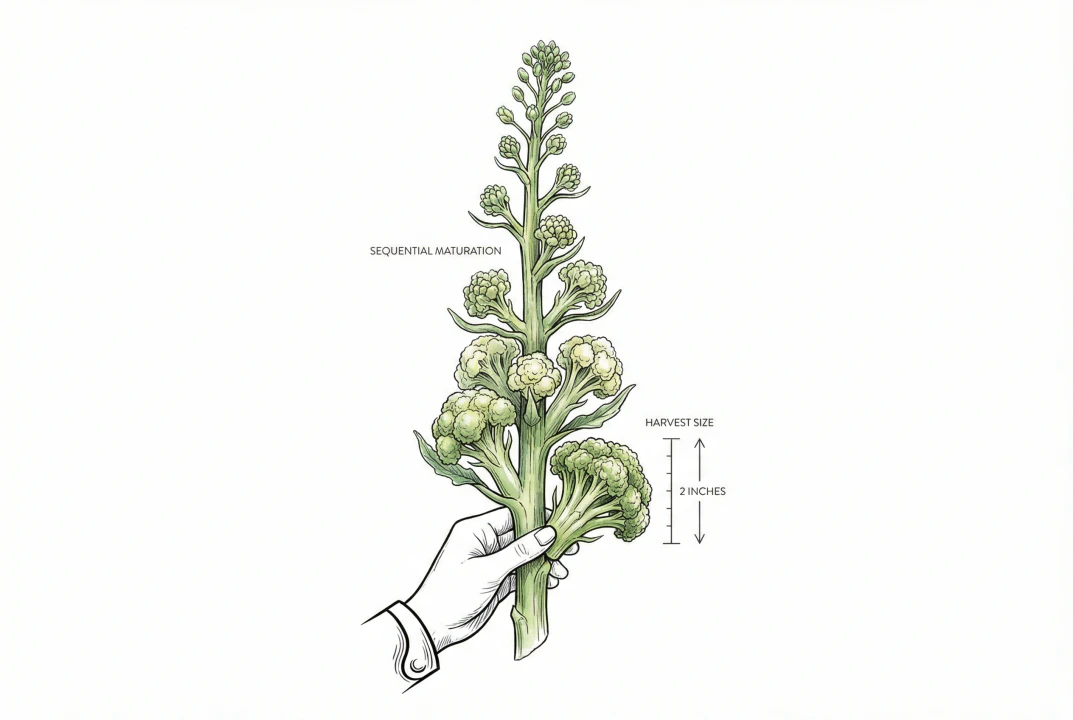
Pick florets starting from the bottom of the stalk. Many detach with a clean snap, but firmer ones can be cut, so use whichever the plant allows.
The lower buds generally mature first, so you work your way up the stalk over the season. If you top the plant, the upper florets can instead size up first.
Johnny’s suggests picking at roughly 1.5-2 inches across. Judge readiness by size together with firmness, color, and any pest damage.
I tag five plants at equal intervals through the planting, excluding outside rows and row-end plants. When fewer than five interior plants exist, I tag all of them. A loose band moves to the node above the last harvested rosette, and five spaced plants reveal uneven picking without letting exposed edge growth define the whole harvest.
For a frost-flavor comparison, I save similarly sized rosettes from the same tagged plant on both sides of a cold event and cook them by the same method. This is a personal harvest check, not proof that every cultivar sweetens by the same amount.
Cooking for Flavor
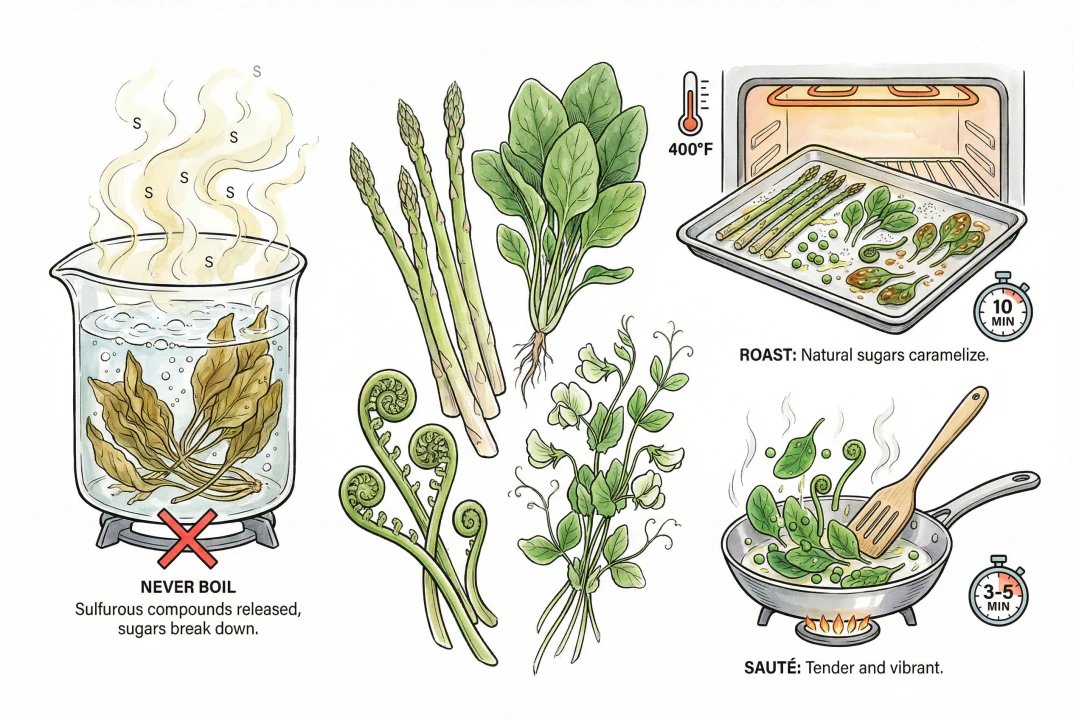
Roasting and sauteing suit their small size well, but they are not the only options. The official Kalettes site also lists steaming, braising, and a short boil, so avoiding boiled Kalettes is a preference rather than a rule.
A light frost tends to improve flavor. Cold acclimation can raise soluble sugars in brassicas such as kale, though the exact effect varies with variety and temperature, so a post-frost harvest often tastes sweeter and nuttier.
Dry, high heat browns the surface and develops sweetness, while a long, hard boil in lots of water can leach nutrients and bring out stronger sulfur aromas. A brief boil or blanch is fine.
As a starting point, roast small rosettes at about 400°F for around 10 minutes, or saute for 3-5 minutes, adjusting for size, oil, pan spacing, and how done you like them, and cook until just tender and lightly browned.
The Roots of Plant Frost Hardiness and Tolerance
Storage
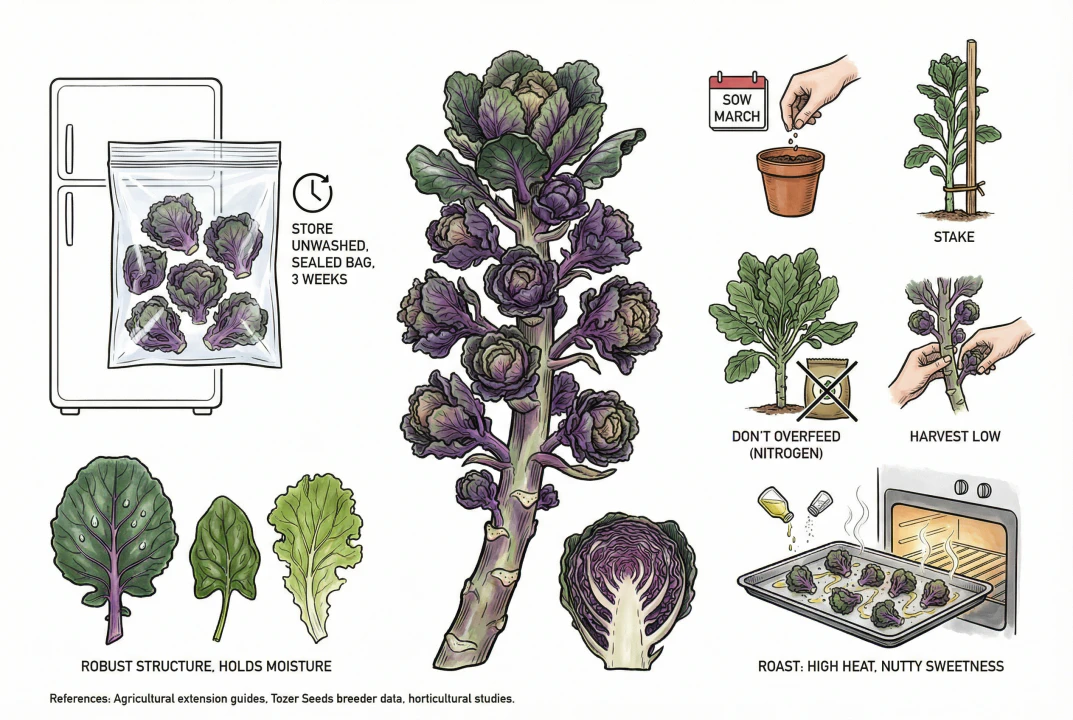
They store reasonably well cold. Johnny’s cites 4-6 weeks under commercial conditions (around 36°F/2°C at 95-98% humidity). An ordinary home fridge is warmer and drier, so expect less.
Store them unwashed, cool them promptly, and use a perforated or loosely closed bag to limit condensation. A couple of weeks is a realistic target, and check for spoilage as you go.
Their firmer leaf structure tends to hold up better than tender greens, but actual keeping quality depends on temperature, humidity, and how they are packaged.
Affiliate Disclosure
This article contains Amazon affiliate links. As an Amazon Associate I earn from qualifying purchases. If you use these links, the site may earn a commission at no extra cost to you. Product availability, price, and specifications can change. Check the current listing before buying.